Category: Food License (FSSAI)

  • How To Renew FSSAI Food License In India: Step-by-Step Guide

    Running a food business in India requires strict compliance with food safety regulations laid down by the Food Safety and Standards Authority of India. Whether you own a restaurant, cloud kitchen, food manufacturing unit, bakery, catering business, or grocery store, obtaining and renewing an FSSAI license is mandatory to operate legally.

    Many food business operators often overlook the importance of timely renewal, which can lead to penalties, suspension, or cancellation of the license. This is why understanding the renewal procedure is essential for uninterrupted business operations.

    If you are looking for professional assistance with FSSAI compliance, TMWala can help businesses manage documentation, application filing, renewals, annual returns, and license modifications smoothly and efficiently.

    What is FSSAI Food License Renewal?

    FSSAI food license renewal refers to the process of extending the validity of an existing FSSAI registration or license before its expiry date. Every Food Business Operator (FBO) registered under FSSAI must renew their registration periodically to continue operating legally in India.

    The renewal process is completed online through the official FoSCoS portal and should ideally be initiated at least 30 days before the expiry of the existing license.

    Why is FSSAI License Renewal Important?

    FSSAI license renewal is necessary to maintain compliance with food safety laws and regulations in India. A valid FSSAI license helps businesses:

    • Continue operations without legal interruptions 
    • Build consumer trust and credibility 
    • Avoid penalties and late fees 
    • Ensure compliance with food hygiene and safety standards 
    • Prevent suspension or cancellation of business activities 

    Failure to renew the license within the prescribed timeline may result in heavy penalties and operational restrictions.

    FSSAI Renewal Online

    The government has simplified the entire renewal system through the FoSCoS portal, making FSSAI renewal online convenient and accessible for all food business operators.

    Businesses can now:

    • Apply for renewal online 
    • Upload required documents 
    • Pay renewal fees digitally 
    • Track application status 
    • Download renewed certificates 

    Food Safety And Standards Authority Of India License Renewal Online

    This digital process reduces paperwork and speeds up approvals.

    The Food Safety and Standards Authority of India license renewal online process is carried out through the FoSCoS portal introduced by FSSAI. Food business operators can log in using their credentials and complete the renewal process from anywhere.

    The online system helps businesses maintain transparency, track applications in real time, and avoid delays associated with offline submissions.

    FSSAI Renewal Process

    The FSSAI renewal process involves a few important steps that every business must follow carefully. 

    Step 1: Visit the FoSCoS Portal – Visit the official FoSCoS portal ( FoSCoS – FSSAI ) and log in using your registered credentials.

    Step 2: Select Renewal Option – Choose the license or registration you wish to renew from the dashboard.

    Step 3: Fill Application Form –

    • Form A is used for basic registration. 
    • Form B is used for State and Central licenses. 

    Ensure that all business details are accurate and updated.

    Step 4: Upload Documents – Upload all necessary documents required for renewal.

    Step 5: Pay Applicable Fees – Pay the renewal fees online according to the type and validity period selected.

    Step 6: Submit Application – After reviewing all information, submit the application online.

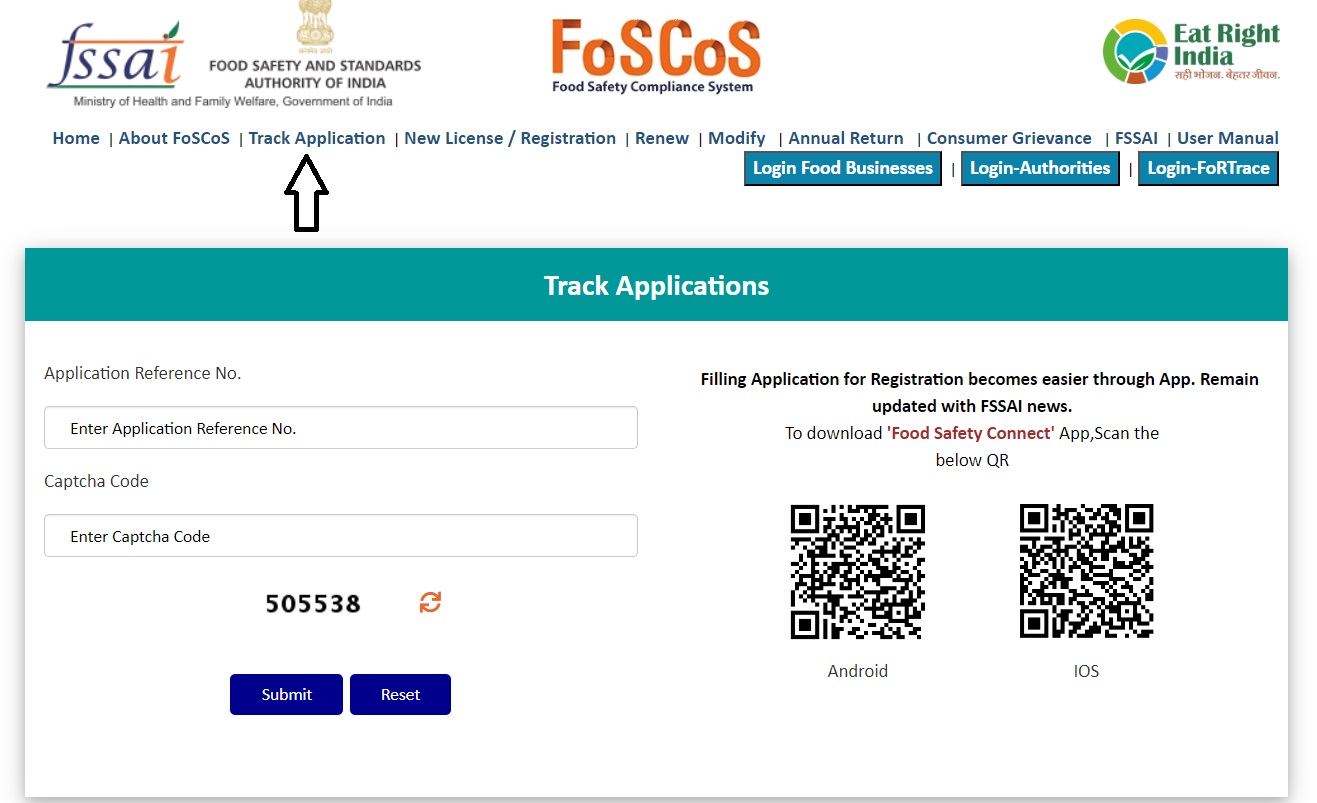
    Step 7: Track Application Status – You can monitor the application status through the FoSCoS portal using your application reference number.

    Businesses that want hassle-free compliance management can also take assistance from TMWala for accurate filing and timely renewal support.

    FSSAI Renewal Fees

    FSSAI renewal fees depend on the category of license and the duration selected by the business operator.

    Fee Structure

    TypeAnnual Fees
    Basic Registration₹100 per year
    State License₹2,000 to ₹5,000 per year
    Central LicenseUp to ₹7,500 per year

    The fee varies based on business turnover, production capacity, and the type of food business.

    Late renewal may attract a penalty of ₹100 per day after expiry.

    Documents Required for FSSAI Renewal

    The following documents are generally required during the renewal process:

    • Existing FSSAI License or Registration Certificate 
    • Renewal application form 
    • Identity proof of the Food Business Operator 
    • Passport-size photographs 
    • Address proof of business premises 
    • Food Safety Management System (FSMS) declaration 
    • Partnership deed, MOA, or incorporation certificate, where applicable 
    • Self-declaration regarding compliance with food safety standards 
    • Supporting documents for modifications, if any 

    Submitting complete and accurate documentation helps avoid delays in approval.

    FSSAI License Validity Period

    The FSSAI license validity period ranges from 1 year to 5 years, depending on the duration selected by the Food Business Operator at the time of registration or renewal.

    Businesses should choose a longer validity period to reduce the frequency of renewals and maintain continuous compliance.

    The validity remains subject to timely fee payment and adherence to food safety regulations.

    How to Check FSSAI License Renewal Status

    Businesses can easily check their renewal status online through the FoSCoS portal.

    Steps to Check Renewal Status

    • Visit the FoSCoS portal. 
    • Log in with your registered credentials. 
    • Navigate to the License/Registration section. 
    • Enter your 14-digit FSSAI license number. 
    • Click on the status or validity option. 
    • View the current application or renewal status. 

    The portal also allows businesses to track applications using the reference number generated during submission.

    FSSAI Registration Vs License

    Understanding the difference between registration and a license is important for food businesses.

    ParticularsFSSAI RegistrationFSSAI License
    Turnover LimitUp to ₹12 lakh annuallyAbove ₹12 lakh annually
    Business TypePetty food businessesMedium and large businesses
    Application FormForm AForm B
    Fees₹100 per year₹2,000 to ₹7,500 per year
    TypesBasic RegistrationState and Central License
    ValidityBased on registration category1 to 5 years

    Businesses should select the appropriate category according to their turnover and operational scale.

    FSSAI Certificate Renewal

    FSSAI certificate renewal is mandatory for all eligible food business operators in India. The renewal application should ideally be submitted at least 30 days before expiry to avoid penalties.

    If the license expires, renewal can still be done within 180 days by paying the prescribed late fee. However, operating with an expired license may lead to legal complications.

    Timely renewal ensures uninterrupted business operations and continues regulatory compliance.

    Renewal Timeline And Late Penalty

    Food businesses should remember the following important timelines:

    • Apply at least 30 days before expiry 
    • Renewal after expiry attracts a ₹100 per day penalty 
    • Renewal can generally be done up to 180 days after expiry 
    • Delayed renewals may result in suspension or cancellation 

    Planning the renewal process early helps businesses avoid unnecessary complications.

    FSSAI Annual Return

    Certain categories of food businesses are also required to file annual returns under FSSAI regulations.

    Who Needs to File?

    • Manufacturers 
    • Importers 
    • Exporters 
    • Food processors 

    Important Points

    • Annual return filing generally opens in April 
    • The due date is usually 31st May for the previous financial year 
    • Businesses must provide details regarding the food products handled or manufactured 

    Failure to file annual returns may attract penalties and compliance notices.

    FSSAI License Modification

    Businesses often need to update their license details due to operational changes. The FoSCoS portal allows online modifications for such cases.

    Common Reasons for Modification

    • Change of address 
    • Addition of food products 
    • Ownership transfer 
    • Change in business structure 
    • Increase in production capacity 

    Modification Process

    • Log in to the FoSCoS portal 
    • Select “Apply for Modification” 
    • Update the required information 
    • Upload supporting documents 
    • Pay applicable fees 
    • Submit the application 

    The modification fees may vary depending on the type of change requested.

    Conclusion

    Renewing an FSSAI license on time is an essential responsibility for every food business operator in India. A valid license not only ensures legal compliance but also strengthens customer confidence and business credibility.

    From renewal applications and annual returns to license modifications, maintaining proper compliance can sometimes become time-consuming for businesses. This is where TMWala can assist with end-to-end support for FSSAI registration, renewals, documentation, compliance management, and regulatory filings.

    Timely action, proper documentation, and professional guidance can help food businesses operate smoothly while staying compliant with Indian food safety regulations.

    Important FAQs

    1. What is the FSSAI food license renewal?
    FSSAI food license renewal is the process of extending the validity of an existing FSSAI registration or license before it expires.

    2. When should I apply for FSSAI license renewal?
    You should apply at least 30 days before the expiry date of your license.

    3. Can I complete FSSAI renewal online?
    Yes, the entire FSSAI renewal online process can be completed through the FoSCoS portal.

    4. What happens if my FSSAI license expires?
    A late fee of ₹100 per day may apply, and delayed renewal can lead to suspension or cancellation of the license.

    5. What are the documents required for FSSAI renewal?
    Common documents include the existing license, identity proof, photographs, FSMS declaration, and business documents.

    6. What is the FSSAI license validity period?
    The validity period ranges from 1 year to 5 years, depending on the option selected during application.

    7. How can I check my FSSAI renewal status?
    You can check the status online through the FoSCoS portal using your 14-digit license number or application reference number.

    8. What is the difference between FSSAI registration and a license?FSSAI registration is for small businesses with a turnover of up to ₹12 lakh, while an FSSAI license is for medium and large businesses.

    9. Is filing an FSSAI annual return mandatory?
    Yes, manufacturers, importers, exporters, and food processors are required to file annual returns under FSSAI regulations.

    10. Can I modify my FSSAI license details online?
    Yes, businesses can apply for FSSAI license modification online through the FoSCoS portal for address changes, ownership updates, or product additions.
  • FSSAI State vs Central License: Key Differences And Eligibility

    Starting or running a food business in India comes with strict regulatory responsibilities, and one of the most important is obtaining the correct FSSAI State license. Many business owners struggle with understanding the FSSAI central license vs state license, which often leads to incorrect applications, delays, or even legal complications. Choosing the wrong license category can disrupt operations and create unnecessary compliance burdens.

    This is where expert guidance becomes valuable. Platforms like TMWala assist food businesses in identifying the correct license type, preparing documentation, and ensuring smooth application through the FoSCoS portal.

    India follows a structured licensing system governed by the Food Safety Standards Authority of India, ensuring that food products are safe, hygienic, and suitable for consumption. Whether you are a small home-based food seller or a large manufacturer, understanding the difference between FSSAI state and central licenses is essential for compliance and growth.

    Understanding FSSAI and Its Importance

    The Food Safety and Standards Authority of India (FSSAI) is the regulatory body established under the Food Safety and Standards Act, 2006. Its primary objective is to regulate and supervise food safety across the country. Every entity involved in food-related activities must obtain a food business operator license before commencing operations.

    This requirement applies to a wide range of businesses, including:

    • Restaurants and cafes
    • Food manufacturers and processors
    • Cloud kitchens and home kitchens
    • Storage and transportation units
    • Importers and exporters

    Operating without a valid license is considered a legal violation and may result in penalties, cancellation of business activities, or prosecution.

    | Register your FSSAI License with TMwala

    Types Of FSSAI Licenses

    FSSAI follows a three-tier licensing system based on business size, turnover, and operational scope:

    • Basic Registration – For small or petty food businesses with minimal turnover
    • State License – For medium-scale businesses operating within one state
    • Central License – For large-scale or multi-state operations

    Among these, the most common confusion arises in FSSAI state license vs central license, which requires careful evaluation of eligibility criteria.

    What Is an FSSAI State License?

    The State FSSAI License is designed for medium-sized food businesses that operate within a single state. It is issued by the respective State Government’s Food Safety Department.

    Key Features:

    • Applicable to businesses with turnover between ₹12 lakh and ₹20 crore
    • Limited to operations within one state
    • Valid for 1 to 5 years, depending on the application
    • Renewable before expiry

    Suitable For:

    • Restaurants and mid-sized food outlets
    • Small to medium manufacturers
    • Storage units like warehouses and cold storage
    • Distributors and transporters

    Understanding FSSAI state license eligibility is crucial for businesses that fall within this category. Eligibility depends not only on turnover but also on production capacity and type of operations.

    What Is an FSSAI Central License?

    The Central FSSAI License is the highest level of certification and is issued directly by the central authority. It is mandatory for large-scale businesses and those operating across multiple states or internationally.

    Key Features:

    • Required for turnover exceeding ₹20 crore
    • Mandatory for multistate operations
    • Applicable to importers and exporters
    • Valid for 1 to 5 years

    Suitable For:

    • Large food manufacturers
    • Import-export businesses
    • Companies supplying to government agencies
    • Food businesses operating at airports, seaports, or railways

    Businesses must carefully evaluate FSSAI central license eligibility before applying, as incorrect classification can lead to rejection or compliance issues.

    Key Differences Between State And Central Licenses

    Understanding what is the difference between a state license and a central FSSAI license is helps businesses make the right decision. Below are the major distinctions:

    1. Issuing Authority
      • State License: Issued by the State Food Safety Department
      • Central License: Issued by the Central FSSAI Authority
    2. Turnover Requirement
      • State License: ₹12 lakh to ₹20 crore
      • Central License: Above ₹20 crore
    3. Operational Scope
      • State License: Single-state operations
      • Central License: Multistate or nationwide operations
    4. Business Type
      • State License: Medium-scale businesses
      • Central License: Large-scale and specialized operations
    5. Applicability
      • State License: Local manufacturers, restaurants, distributors
      • Central License: Importers, exporters, large manufacturers

    These differences clearly define the difference between the FSSAI state and central licenses and help businesses align their compliance requirements.

    Eligibility Criteria for FSSAI Licenses

    FSSAI State License Eligibility

    To qualify for a state license, businesses must meet the following criteria:

    • Annual turnover between ₹12 lakh and ₹20 crore
    • Operating within a single state
    • Engaged in food manufacturing, storage, distribution, or retail
    • Compliance with production capacity limits

    FSSAI Central License Eligibility

    Businesses must apply for a central license if:

    • Annual turnover exceeds ₹20 crore
    • Operations span across multiple states
    • Engaged in import/export activities
    • Supplying food to government institutions
    • Running large-scale food processing units

    Careful evaluation of FSSAI central license eligibility ensures businesses remain compliant and avoid regulatory issues.

    Role Of State Food Authority in FSSAI

    The role of the state food authority in FSSAI is fundamental in maintaining food safety standards at the regional level. These authorities act as the backbone of enforcement and compliance.

    Key Responsibilities:

    • Implementation of food safety laws within the state
    • Issuing, renewing, and cancelling licenses
    • Conducting inspections of food establishments
    • Monitoring hygiene and safety practices
    • Coordinating with central authorities during emergencies
    • Submitting surveillance and compliance reports

    The effectiveness of the state authority ensures that food businesses adhere to national standards while addressing local challenges.

    Application Process for FSSAI License

    Applying for an FSSAI license is done through the FoSCoS portal. The process involves:

    • Selecting the appropriate license type
    • Filling out the required application form
    • Uploading necessary documents
    • Paying the applicable fee
    • Awaiting inspection (if required)
    • Receiving the license upon approval

    Errors in application details or incorrect license selection are common reasons for rejection. This is where TMWala plays an important role by guiding applicants through each step and ensuring accuracy.

    Documents Required

    For both state and central licenses, businesses typically need:

    • Identity and address proof of the applicant
    • Business registration documents
    • Blueprint of the processing unit
    • List of equipment and machinery
    • Food safety management plan

    Central licenses may require additional documentation due to the scale and nature of operations.

    Renewal And Compliance

    FSSAI licenses must be renewed before expiry to avoid penalties. Non-compliance may result in:

    • Fines
    • Suspension of license
    • Cancellation of business operations

    Maintaining hygiene standards, proper labeling, and regular audits is essential for continued compliance.

    Common Mistakes To Avoid

    • Applying for the wrong license category
    • Ignoring turnover thresholds
    • Submitting incomplete documentation
    • Delaying renewal

    Understanding the nuances of FSSAI state license vs central license helps prevent these issues.

    How TMWala Can Help

    Navigating FSSAI regulations can be complex, especially for new entrepreneurs. TMWala simplifies the process by:

    • Assessing business eligibility
    • Identifying the correct license type
    • Preparing and verifying documents
    • Handling application and follow-ups

    This ensures that businesses obtain their food business operator license without delays or complications.

    Conclusion

    Choosing between a state and central FSSAI license is a critical decision that directly impacts your business operations and compliance. Understanding the FSSAI central license vs state license framework, along with eligibility requirements and operational scope, ensures that businesses remain legally compliant and avoid unnecessary setbacks.

    The Food Safety and Standards Authority of India has established a robust system to protect public health, and every food business must align with its regulations. By clearly understanding what the difference between a state license and the central FSSAI license is, businesses can make informed decisions and focus on growth.

    For those who want a smooth, error-free process, TMWala offers expert support at every stage, from selection to approval, helping businesses stay compliant and confident in their operations.

    FAQs

    1. What is the difference between FSSAI State and Central License?
      State License is for single-state businesses; a Central License is for large or multistate operations under the Food Safety and Standards Authority of India.
    2. Who needs an FSSAI State License?
      Businesses with ₹12 lakh- ₹20 crore turnover operating within one state.
    3. Who requires an FSSAI Central License?
      Businesses with turnover above ₹ 20 crore or involved in multi-state or import-export activities.
    4. Is turnover the only deciding factor?
      No, business type and operational area also matter.
    5. What if I choose the wrong license?
      Your application may be rejected or delayed.
    6. Can I operate in multiple states with a State License?
      No, a Central License is required.
    7. What is the validity of FSSAI licenses?
      1 to 5 years, depending on selection.
    8. What documents are required?
      ID proof, business registration, address proof, and food safety plan.
    9. What do State Food Authorities do?
      They issue State Licenses and ensure compliance.
    10. Is FSSAI registration mandatory?
      Yes, for all food businesses under the Food Safety and Standards Authority of India.
  • Food Safety Management System In India

    Food safety is no longer limited to routine inspections and end-product testing. In today’s regulatory and business environment, food businesses are expected to demonstrate structured control over hazards, transparent processes, and documented compliance. This is where a food safety management system becomes essential. In India, the regulatory framework supporting such systems is robust and continually evolving, requiring food businesses to stay informed and proactive.

    This article explores the structure, regulatory backing, and implementation approach of a food safety management system in India, along with the legal foundation established by national authorities and global standards such as the ISO 22000 food safety management system and HACCP principles.

    Understanding The Concept Of FSMS

    A food safety management system is a structured framework that enables food businesses to identify, evaluate, and control hazards that could compromise food safety. Rather than reacting to contamination or non-compliance, an effective FSMS focuses on prevention, continuous monitoring, documentation, and verification.

    An FSMS integrates operational controls, staff responsibilities, sanitation programs, supplier management, traceability systems, and internal audits into one coordinated structure. It ensures that food safety is not handled as an isolated function but embedded into every stage of operations, from procurement and processing to storage and distribution.

    At its core, an FSMS defines:

    • Responsibilities across departments
    • Standard operating procedures
    • Monitoring and verification mechanisms
    • Documentation and recordkeeping systems

    When properly implemented, it not only ensures regulatory compliance but also strengthens brand credibility and operational efficiency.

    | Know more about FSSAI Registration with TMWala

    Legal Foundation: The Food Safety and Standards Act

    The modern regulatory landscape in India is anchored by the Food Safety and Standards Act, 2006, commonly referred to as the Food Safety and Standards Act India. This Act consolidated multiple food laws into a single comprehensive statute and established the Food Safety and Standards Authority of India to oversee food regulation and enforcement across the country.

    The Act provides a science-based framework for:

    • Setting standards for food products
    • Regulating the manufacture, storage, distribution, sale, and import
    • Protecting public health
    • Ensuring safe and wholesome food availability

    Under this Act, every Food Business Operator (FBO), whether small-scale or large enterprise, must comply with licensing, hygiene, labelling, and operational requirements.

    A well-designed food safety management system FSSAI ensures that businesses align their internal processes with the mandates issued under this law.

    Regulatory Framework: FSSAI Regulations 2011

    The operational backbone of compliance lies within the FSSAI regulations 2011, which detail specific standards, licensing requirements, and operational guidelines.

    One of the most significant components of these regulations is the Packaging and Labelling Regulations, 2011. These rules require food businesses to provide accurate, clear, and truthful information on food labels, including:

    • Product name and ingredient list
    • Nutritional information
    • Allergen declarations
    • Net quantity
    • Manufacturer or importer details
    • Vegetarian or non-vegetarian marking
    • Storage instructions

    The emphasis is on consumer transparency. Misleading claims, incomplete labelling, or unsafe packaging materials can lead to penalties, product recalls, or cancellation of licenses.

    Businesses implementing a structured FSMS can systematically manage labelling compliance, packaging material verification, and documentation to avoid regulatory lapses.

    FSSAI Schedule 4: The Hygiene Mandate

    A key operational guideline within Indian food regulation is FSSAI Schedule 4, which specifies general hygienic and sanitary practices that must be followed by Food Business Operators.

    Schedule 4 outlines compulsory requirements covering:

    • Infrastructure and facility design
    • Water quality and waste disposal
    • Pest control
    • Personnel hygiene
    • Cleaning and sanitation procedures
    • Equipment maintenance

    It clearly establishes that maintaining hygienic premises is the responsibility of the Food Business Operator. The objective is to ensure that food establishments adopt preventive measures rather than corrective ones.

    For many businesses, translating the legal language of FSSAI Schedule 4 into practical, daily operations can be challenging. This is where structured documentation, internal audits, and expert guidance become valuable. TMWala can assist food businesses in interpreting regulatory clauses, preparing hygiene SOPs, and conducting readiness assessments aligned with FSSAI requirements.

    Integrating HACCP Principles Into FSMS

    An effective food safety management system is incomplete without integrating HACCP principles. Hazard Analysis and Critical Control Points (HACCP) is a globally recognized preventive approach that focuses on identifying hazards before they occur.

    The seven HACCP principles include:

    • Conducting hazard analysis
    • Determining critical control points
    • Establishing critical limits
    • Setting up monitoring procedures
    • Defining corrective actions
    • Implementing verification procedures
    • Maintaining documentation and records

    In the Indian context, HACCP aligns closely with FSSAI expectations and international trade requirements. It ensures that food businesses systematically manage biological, chemical, and physical hazards.

    Many export-oriented companies integrate HACCP with ISO-based management systems to meet both domestic and international compliance standards.

    ISO 22000 Food Safety Management System: Global Alignment

    The ISO 22000 food safety management system is an internationally recognized standard that integrates HACCP principles with broader management system elements such as leadership involvement, risk-based thinking, and continuous improvement.

    ISO 22000 emphasizes:

    • Interactive communication within the food chain
    • System management and documentation
    • Prerequisite programs (PRPs)
    • Operational control measures
    • Performance evaluation

    For Indian businesses seeking global market access, ISO 22000 certification strengthens credibility and demonstrates commitment to structured food safety risk management.

    While FSSAI compliance is mandatory, ISO certification is voluntary. However, adopting ISO 22000 helps organizations move beyond minimum compliance and toward operational excellence.

    TMWala supports food businesses in designing and implementing ISO-aligned frameworks, conducting gap analyses, and preparing for third-party audits to achieve seamless certification.

    Food Safety Risk Management: A Strategic Approach

    In today’s environment, food safety risk management extends beyond factory floors. It includes supply chain integrity, transportation controls, storage conditions, and even digital traceability.

    Risk management involves:

    • Identifying potential hazards at every stage
    • Assessing likelihood and severity
    • Implementing preventive controls
    • Monitoring performance indicators
    • Reviewing system effectiveness

    An advanced FSMS incorporates risk-based thinking into decision-making processes. For example, supplier audits, temperature monitoring systems, and recall procedures form part of proactive risk management.

    Digital tools are increasingly used to monitor temperature logs, track deviations, and maintain records that are audit-ready. Automated alerts and real-time dashboards improve responsiveness and reduce the risk of non-compliance.

    Documentation and Audit Preparedness

    One of the most critical aspects of a food safety management system FSSAI is documentation. Regulatory inspections often focus not only on physical conditions but also on documented evidence of compliance.

    Essential records include:

    • Cleaning schedules
    • Pest control logs
    • Calibration records
    • Supplier approvals
    • Employee training records
    • Corrective action reports

    An organized documentation system simplifies inspections and enhances internal accountability.

    TMWala can help businesses establish structured documentation formats, conduct mock audits, and train staff to maintain compliance-ready records. This proactive approach reduces the stress associated with official inspections.

    Why FSMS Matters for Indian Food Businesses

    The food industry in India is expanding rapidly, with increasing consumer awareness and stricter enforcement. A strong food safety management system in India offers multiple benefits:

    • Legal compliance under the Food Safety and Standards Act of India
    • Alignment with FSSAI regulations 2011
    • Improved operational efficiency
    • Enhanced brand reputation
    • Reduced risk of product recalls
    • Better export opportunities

    Consumers today are more informed and cautious. Transparent labelling, hygienic production, and responsible sourcing are not optional; they are expectations.

    Moving Beyond Compliance Toward Excellence

    While regulatory compliance forms the baseline, leading food businesses view FSMS as a strategic investment rather than a regulatory burden. Integrating HACCP principles, aligning with the iso 22000 food safety management system, and strengthening food safety risk management processes position companies for long-term growth.

    In India’s dynamic regulatory environment, staying updated and structured is essential. Businesses that proactively adopt and continuously improve their food safety management system are better equipped to handle inspections, scale operations, and build lasting consumer trust.

    With the right expertise and structured guidance from professionals such as TMWala, food businesses can transform compliance requirements into competitive advantages.

    FAQs

    1. What is a food safety management system?
      A structured system to identify, control, and monitor food safety hazards.
    2. Is FSMS mandatory in India?
      Yes, under the Food Safety and Standards Act, 2006.
    3. Who regulates food safety in India?
      The Food Safety and Standards Authority of India (FSSAI).
    4. What are the FSSAI regulations 2011?
      Rules covering licensing, hygiene, packaging, and labelling.
    5. What is FSSAI Schedule 4?
      Mandatory hygiene and sanitation requirements for FBOs.
    6. What are HACCP principles?
      Preventive steps to identify and control food safety hazards.
    7. What is the ISO 22000 food safety management system?
      An international standard for structured food safety management.
    8. Is ISO 22000 compulsory?
      No, but it improves credibility and export readiness.
    9. What is food safety risk management?
      Identifying and controlling risks across the food chain.
    10. How can TMWala help?
      Supports FSMS setup, documentation, and audit readiness.
  • LATEST FSSAI UPDATES: WHAT FOOD BUSINESSES NEED TO KNOW

    The Food Safety and Standards Authority of India has introduced a comprehensive set of changes that will significantly reshape the way food businesses operate across the country. The FSSAI’s new regulations, officially published on July 10, 2025, are scheduled to take effect from February 1, 2026. These revisions strengthen existing food safety rules and regulations in India, ensuring that Indian standards stay aligned with international expectations and consumer protection goals. For detailed information on FSSAI and the registration process, please visit this page.

    The amendment introduces new criteria for a broad range of food categories, including edible oils, processed meats, herbs, enzymes, colours, and packaged beverages. With these updates, the industry is set to undergo one of the most substantial regulatory transitions of recent years.

    Read the official notification here.

    MAJOR CHANGES INTRODUCED IN PRODUCT STANDARDS

    Revised FSSAI Refractive Index for Edible Oils

    FSSAI has redefined the refractive index ranges for popular edible oils, including palm oil and palmolein. These updated values, now standardized at 40°C and 50°C, are crucial for detecting adulteration and ensuring purity. Laboratories and oil manufacturers will need to modify testing protocols to maintain FSSAI compliance. Businesses seeking assistance can use TMWala’s regulatory support services to ensure accurate transition and documentation.

    FSSAI Regulatory Standards for Meat Sausages

    For the first time, clear-cut parameters have been issued for different types of sausages smoked, cooked, fermented, or fresh. These standards outline:

    • Defined ingredient composition
    • Approved processing techniques
    • Mandatory temperature-controlled storage
    • Rules on additives, hygiene, and microbiological criteria

    This marks a significant step forward in regulating processed meat products and reducing compliance ambiguity.

    New Standards for Dehydrated Tarragon (Vilayati Damnak)

    Tarragon (Artemisia dracunculus), commonly used as a culinary herb, now has formal quality specifications in India. These include limits on moisture, ash content, foreign particles, essential oil percentage, and the presence of compounds like methyleugenol and estragole. This clarity supports better import screening and domestic quality assurance.

    Packaged Drinking Water – Changes in SKU Categories

    FSSAI has restructured pack-size classifications for drinking water. The amendments include:

    • Revised volume brackets, such as 75 ml to 500 ml, for certain categories
    • Alignment of SKU segments to prevent market confusion

    Beverage companies must update packaging lines and labeling to meet the new norms before release.

    UPDATES IN ADDITIVES AND PROCESSING AIDS

    Food Colours and Safety

    Earlier footnotes regarding the absence of toxic contaminants (such as heavy metals) in synthetic food colours like Tartrazine and Sunset Yellow have been removed. Instead, colour safety will now be governed through broader contaminant standards established under the 2011 framework. These updates require manufacturers to reassess internal quality controls and labeling in accordance with the Food licensing and registration system.

    Clarification on Synthetic Food Colour Mixtures

    The amendment brings clearer definitions of what constitutes an acceptable colour mixture. It outlines:

    • Approved carriers such as sugar, starch, or salt
    • Compulsory declaration of total colour content
    • Rules for product clarity and uniformity

    This offers transparency for manufacturers and ensures consistent quality across processed foods.

    Removal of Limits on Steviol Glycosides in Hot Beverages

    The previous cap of 160 ppm for steviol glycosides in hot beverages has been eliminated. This gives formulators enhanced flexibility, particularly for tea, herbal blends, and other low-calorie drinks. Innovation in the natural sweetener category is expected to accelerate as a result.

    EXPANSION OF THE APPROVED ENZYME LIST

    FSSAI has broadened its list of permitted enzymes sourced from both GMO and non-GMO strains. These enzymes support key applications, including:

    • Oil degumming
    • Milk coagulation (e.g., Chymosin)
    • Egg and seafood processing
    • Dough improvement and starch modification

    All added enzymes must still meet strict contaminant and safety limits, ensuring high product integrity.

    WHAT FOOD BUSINESS OPERATORS MUST PREPARE FOR

    To comply with the new framework, FBOs must understand how each category affects their operations:

    Area AffectedWho It Applies ToRisk of Non-Compliance
    Revised oil indicesOil processors, testing labsAdulteration alerts, regulatory rejection
    Sausage standardsMeat processorsPenalties, product withdrawals
    Packaged water volumesBeverage manufacturersLabel errors, SKU restrictions
    Food colours & additivesProcessed food brandsFines, import/export barriers
    Enzyme regulationsFood manufacturersAudit failures, market disruption

    These regulations make it essential for businesses to stay updated with every FSSAI license update and navigate FSSAI renewal rules without error. TMWala provides hands-on support for navigating application procedures, documentation audits, and compliance reporting.

    WHAT FOOD BUSINESSES NEED TO DO NEXT

    Manufacturers

    Producers must adapt formulations, modify testing methods, and ensure precise labeling before February 2026. Missing any update may result in compliance gaps during inspections.

    Importers

    International suppliers must verify product eligibility before shipping goods to India. Clear adherence to the FSSAI new regulations will help avoid customs delays and costly rejections at entry points.

    Registration & Licensing Requirements

    Companies must also ensure they maintain complete paperwork under the documents required for FSSAI registration, especially if they introduce new product lines or revise formulations. Staying compliant with the evolving food safety and standards authority of India rules is now more critical than ever.

    TMWala can guide FBOs through every stage from documentation and product classification to ongoing maintenance within the Food licensing and registration system.

    CONCLUSION

    As India tightens its regulatory framework, every stakeholder, from small manufacturers to large importers, must align operations with the updated standards. A proactive approach to FSSAI compliance will not only protect your business but also ensure safer products for consumers.

    If your business needs assistance interpreting the new guidelines or preparing for audits, TMWala’s regulatory experts can help streamline the process, avoid penalties, and simplify your journey toward full compliance.

    FAQs

    1. When do the latest FSSAI new regulations come into effect?
      They will be enforced from February 1, 2026.
    2. Why did FSSAI update multiple product standards?
      To strengthen food safety and align India with global regulatory practices.
    3. What changed in the refractive index standards for edible oils?
      New refractive index values for oils like palm oil and palmolein at 40°C and 50°C.
    4. What are the new rules for meat sausages?
      Defined composition, processing standards, storage requirements, and microbiological limits.
    5. What standards were added for dehydrated tarragon?
      Limits on moisture, ash, volatile oil, foreign matter, and certain compounds.
    6. How have packaged drinking water SKUs changed?
      Revised packsize categories, including updates to the 75 ml–500 ml range.
    7. What changed regarding synthetic food colours?
      Old contaminant footnotes removed; safety now governed by 2011 contaminant standards.
    8. What is the update on steviol glycosides in hot beverages?
      The 160 ppm limit has been removed for greater formulation flexibility.
    9. What’s new in the approved enzyme list?
      Additional GMO and non-GMO enzymes approved for food processing.
    10. What should FBOs do to stay compliant?
      Update formulations, testing, labeling, and ensure all FSSAI compliance documents are in order.
  • HOW TO FILE FSSAI ANNUAL RETURN: STEP-BY-STEP PROCESS

    INTRODUCTION

    For all Food Business Operators (FBOs) licensed by the Food Safety and Standards Authority of India (FSSAI), filing the FSSAI yearly return is a necessary compliance obligation. To avoid fines and preserve regulatory compliance, it is essential to timely file the FSSAI returns, Form D1 FSSAI for general food enterprises and Form D2 FSSAI for dairy businesses, regardless of whether you are engaged in the production, import, export, or handling of food items.

    The FSSAI annual return filing procedure will be explained in this guide, along with particular instructions on how to fill FSSAI Form D1, what information must be recorded, and the dates by which the FSSAI annual return is due date. Comprehending the detailed procedure will guarantee a seamless and precise filing of your returns, whether you’re submitting them online via the FoSCoS portal or offline by mail or email.

    Do you need professional assistance? For complete compliance and peace of mind, TMWALA can assist you in precisely and promptly filing your FSSAI yearly filings.

    After reading this article, you will understand all you need to know about  FSSAI annual return filing, including deadlines and data requirements to keep your company in compliance and avoid penalties.

    TYPES OF FSSAI ANNUAL RETURN

    Making sure all necessary information is correctly documented in Form D1, FSSAI is crucial when filing your FSSAI annual return. All Food Business Operators (FBOs) who manufacture, handle, import, or export food goods are required to fill out this form. A thorough explanation of the data that needs to be entered, while understanding how to fill out the FSSAI Form D1, is provided below in case:

    • FBO Name and Address: By the FSSAI license, clearly disclose the Food Business Operator’s full address and legal name.
    • FSSAI Licence Number: Provide the 14-digit number that was assigned to your company. Make sure your licensing information is up to date and valid.
    • Comprehensive Statement on Food Product Activity: During the fiscal year, you must provide a statement detailing the amounts of food products handled, produced, imported, and exported. This section ought to contain:
    • Food Product Name: Enumerate every food item that your company has produced, handled, imported, or exported.
    • Packaging Size: Indicate the dimensions and kind of each package, including bulk, can, bottle, and other packaging units.
    • Quantity in Metric Tonnes: Indicate each product’s total quantity in metric tonnes.
    • Monetary Value: Indicate the items’ worth for each item on the list, ideally in Indian Rupees (INR).
    • Additional Information for Imports and Exports: Form D1 FSSAI must include the following extra information if your company imports or exports food products:
    • Port or Importing/Exporting Country Name: Indicate the country engaged in the trade or the point of entrance or departure.
    • Kilogram (kg) quantity: Indicate in clear terms how many kg of goods are being imported or exported.
    • CIF/FOB rate per kilogram or unit of packing: Indicate the price per kilogram or unit of packing on a FOB (Free on Board) or CIF (Cost, Insurance, and Freight) basis.
    • Total Value: Indicate the entire trade value of the products that were imported or exported.

    These specifics aid in guaranteeing food items’ traceability and transparency throughout the supply chain. To prevent inconsistencies, it’s crucial to consult your company’s records, sales invoices, import/export paperwork, and inventory logs know how to fill FSSAI Form D1. Since the data on Form D1 must match the information in your current FSSAI license, accuracy is crucial.

    The Food Safety and Standards (Licensing and Registration of Food Businesses) Regulations, 2011 mandate that Food Business Operators (FBOs) engaged in the production, handling, or processing of milk and milk products file the half-yearly return Form D2 FSSAI. The following details provide you with a clear idea of how to fill Form D2 FSSAI if you’re preparing this return and want to know what information is required:

    • FBO Name and Address: Exactly as stated in your FSSAI license, provide the food business’s entire legal name and registered address.
    • Number of FSSAI Licence: Enter your current 14-digit FSSAI license number to guarantee proper identification and police tracking.
    • Specifics of the Purchase of Milk: Complete details regarding the milk that was sourced throughout the reporting period are needed for this section:
      • Type of Milk (cow, buffalo, mixed, etc.).
      • Total Quantity Procured (in MT).
      • Total Fat Content (in MT).
      • Total SNF (Solids-Not-Fat) Content (in MT).
      • Price per Kg of Milk, along with specific fat and SNF percentages.
    • Information Regarding Purchases of Milk Products: Provide the following information with every purchase of items made from milk:
      • The milk product’s name, such as cheese, butter, or cream.
      • Purchase Source (dairy or supplier).
      • The total amount bought.
      • Average Fat and SNF percentages.
      • The closing stock balance and the quantity used throughout the period.
    • Reconstitution Information: The amounts and procedures used to reconstitute any milk productssuch as milk powder combined with water to create liquid milkmust be properly recorded.
    • Milk Products Sold, Manufactured, and Stock Position: Provide details on:
    • Sales, Production, and Stock Status of Milk Products: Give information about:
      • The quantity of each milk product produced.
      • The quantity that was sold.
      • Opening and closing holdings in stocks.
    • Outsourcing Details: Indicate whether any portion of the processing of milk or its transformation into other products was contracted out to other dairy companies. Give specifics about those arrangements.
    • Milk Marketing Information: Describe the marketing strategies used for milk, including distribution data and channels (retail, wholesale, direct to consumer, etc.).
    • Manufacturing and Export declaration: Provide a thorough declaration that details.
      • The quantities of milk products produced and exported (in tons).
      • The half-yearly reporting period’s sale value

    FBOs contribute to maintaining adherence to food safety regulations and guaranteeing data transparency throughout dairy operations by making sure these details are accurately filled out on Form D2 FSSAI. Avoiding inconsistencies and possible fines requires careful preparation of this return.

    FSSAI ANNUAL RETURN FILING PROCEDURE

    The FBOs can file the FSSAI returns, i.e. form D1 and D2 either online or offline. To file the FSSAI returns online, FBOs can log into the FoSCoS portal, fill out the respective form and submit them.

    TMWALA provides expert help for submitting FSSAI yearly returns both online and offline. We guarantee that your forms are accurate and completed on time, regardless of whether you’re working with large volumes of data or intricate import/export records.

    The following is the offline procedure for filing the annual returns:

    • Download and print the Food Safety and Standards (Licensing and Registration of Food Businesses) Regulation, 2011 (the “Regulations”), including forms D1 and D2.
    • Complete the form with your information.
    • The food business owners can email or mail the completed form to the relevant food licensing authorities in their jurisdiction after filling it out.

    The information included on FSSAI returns must be consistent with the information stated and supported by the FSSAI license. If there are any differences in the specifics, the FBOs should adjust the FSSAI license accordingly.

    DUE DATE FOR FILING RETURNS

    The deadline for filing Form D1 of the FSSAI annual return is May 31 of each financial year. Form D2 must be submitted by October 31 for April–September and by April 30 for October–March for dairy operations. Penalties are avoided and compliance is ensured by timely filing.

    PENALTY FOR NON-COMPLIANCE

    According to the Regulations, when FBOs do not file the FSSAI returns within the prescribed due date, a fine of Rs. 100 will be imposed on them every day the default continues, starting from the next day of the due date.

    CONCLUSION

    In addition to being required by law, FSSAI annual return filing on time and accurately is essential to preserving openness and confidence in the operations of your food business. FBOs may make sure they adhere to compliance requirements and stay out of needless trouble by being aware of the FSSAI annual return filing procedure. It’s critical to remain up to date on the appropriate data to report and the FSSAI annual return due date for each form, whether you’re filing Form D1 FSSAI annually for general food enterprises or Form D2 FSSAI half-yearly for dairy operations.

    You have been guided through the entire process by this guide, which includes information on how to fill FSSAI Form D1, paperwork requirements, and online and offline filing alternatives. In addition to safeguarding your license, adhering to FSSAI annual return standards enhances your company’s reputation over time.

    Always verify your entries, make sure they match the information on your FSSAI license, and FSSAI annual return filing on time.

    Let TMWALA take care of your FSSAI filings from beginning to end. Your company remains audit-ready all year long with professional assistance, prompt notifications, and documentation supported by compliance.

  • FSSAI Registration: The Ultimate guide to obtain your Food License

    FSSAI Registration: The Ultimate guide to obtain your Food License

    FSSAI Registration

    FSSAI registration is a mandatory requirement for anyone involved in the food business, including manufacturers, processors, distributors, retailers, and even home-based sellers. In simple terms, it’s a certification that shows you meet the food safety standards set by the Indian government. The FSSAI license number, which you will receive once your registration is complete, must be displayed on your food packaging, menus, and marketing materials. This shows customers that you follow strict food safety protocols.

    If you’re planning to start a food business in India, obtaining an FSSAI registration is essential. FSSAI (Food Safety and Standards Authority of India) ensures that food products meet safety standards, protecting consumer health. Whether you’re applying for an FSSAI registration online, obtaining an FSSAI food license, or understanding the FSSAI certificate process, TMWala has got you covered!

    Learn more about FSSAI License through our website on by clicking here.

    FSSAI registration is mandatory for all food-related businesses in India, from small retailers to large manufacturers. There are different types of FSSAI licenses: Basic License, State License, and Central License. Depending on the scale of your business, you’ll need to choose the appropriate one. For small businesses or startups, a Basic FSSAI registration is sufficient, while larger establishments may require a State or Central FSSAI license. Each comes with its own eligibility criteria and cost, which can be checked on the official FSSAI website.

    There are different types of FSSAI registrations based on the size and nature of your business. If you’re a small-scale business, you may only need basic registration. Medium-sized businesses may require a State License, while large-scale operations will need a Central License. It might sound a bit overwhelming, but we’ll break it down to help you figure out which one fits your business needs. The good news is that once you have this registration in place, it’s like a stamp of approval from the government, letting people know that your food is safe and high quality.

    Importance of FSSAI Registration

    FSSAI registration also provides you with legal protection. Operating without it can lead to heavy fines and penalties, not to mention the risk of being shut down by authorities. You wouldn’t want that after pouring your heart into your food business! So, think of FSSAI registration as a safety net that protects you from legal hassles and helps you run your business smoothly.

    FSSAI registration ensures that your business complies with food safety laws in India, creating trust with consumers. It is compulsory for anyone in the food business, whether you’re a street vendor, restaurant owner, or packaged food manufacturer. Not only does FSSAI licensing help maintain quality standards, but it also ensures that your food products are safe for consumption. Failure to obtain an FSSAI food license can result in penalties and legal action.

    Moreover, FSSAI certification provides credibility to your food business, helping you build a reputation for offering safe and hygienic products. Customers are more likely to trust businesses that display their FSSAI certificate, making it an essential part of your business strategy.

    Lastly, FSSAI registration can help you expand your business. If you’re looking to sell your products through bigger channels like supermarkets, restaurants, or even online platforms, having FSSAI registration is often a requirement. It can also make it easier to access loans or government schemes that support food businesses. In short, FSSAI registration is like the golden ticket for growth!

    Process of Getting FSSAI Registered

    Applying for FSSAI registration online is generally a straightforward process. First, identify which license you need – Basic License, State, or Central. The FSSAI online application process is designed to be user-friendly. You can apply for an FSSAI license online through the FSSAI website by filling in the necessary details and uploading the required documents for FSSAI registration, such as proof of address, photo ID, and details about your food business, details of which are given below.

    Detailed instructions & Step-by-Step Process to apply for FSSAI registration 

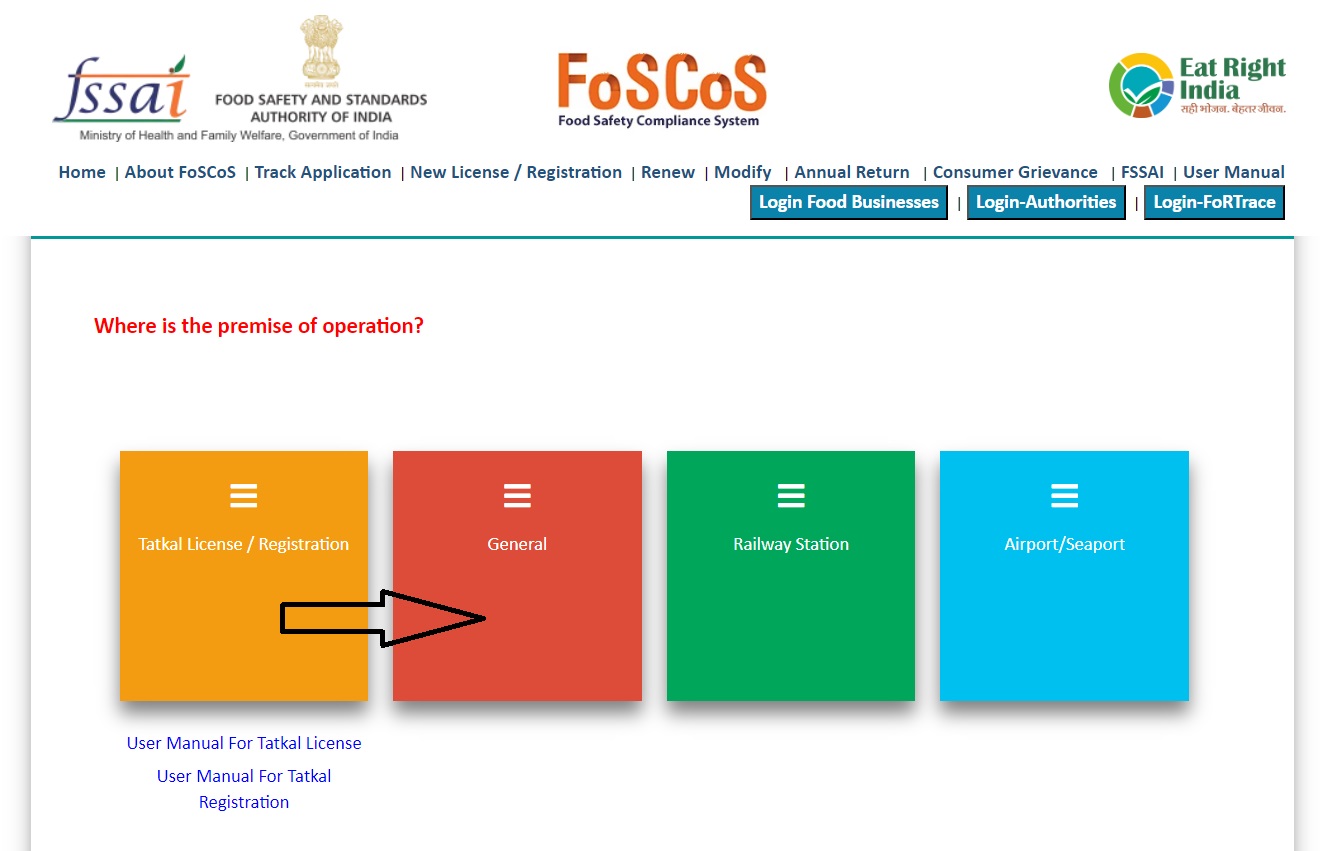
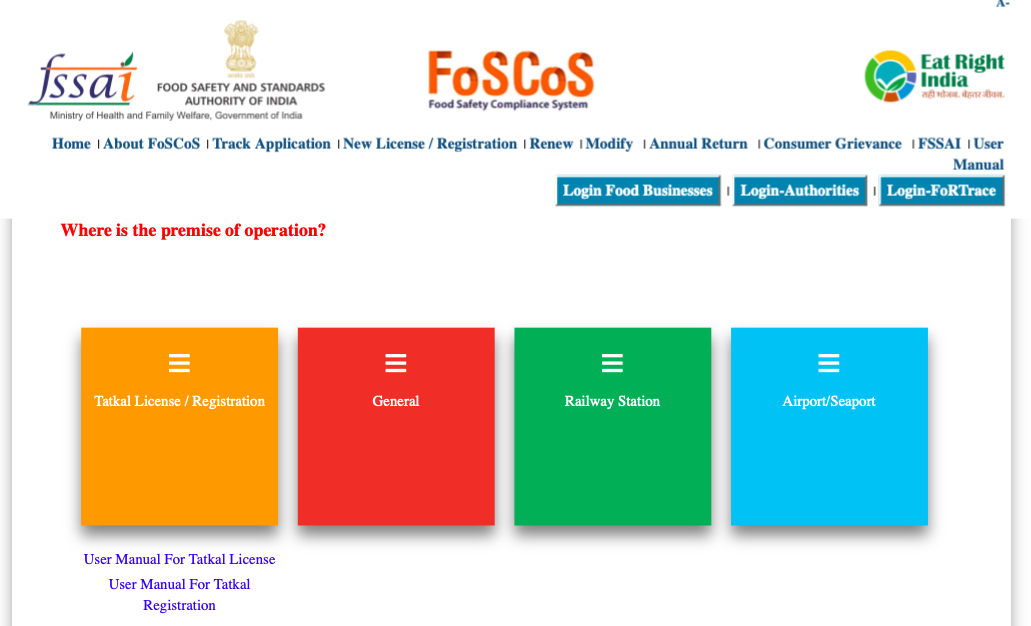
    Step 1 : For registration you need  to go to the site of FSSAI registration  Apply for New License/Registration

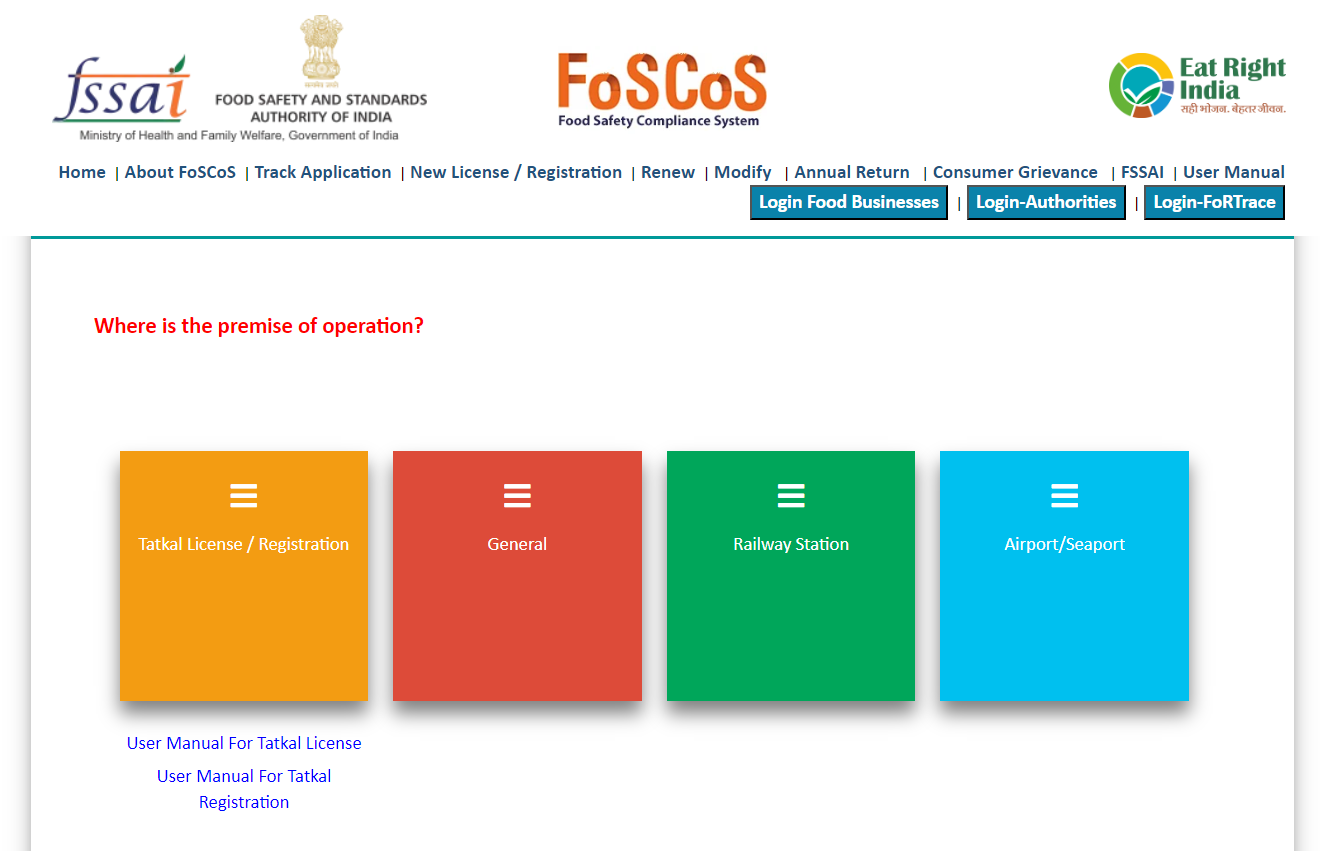
    Step 2 : Go to the red box and click on the “general button”.

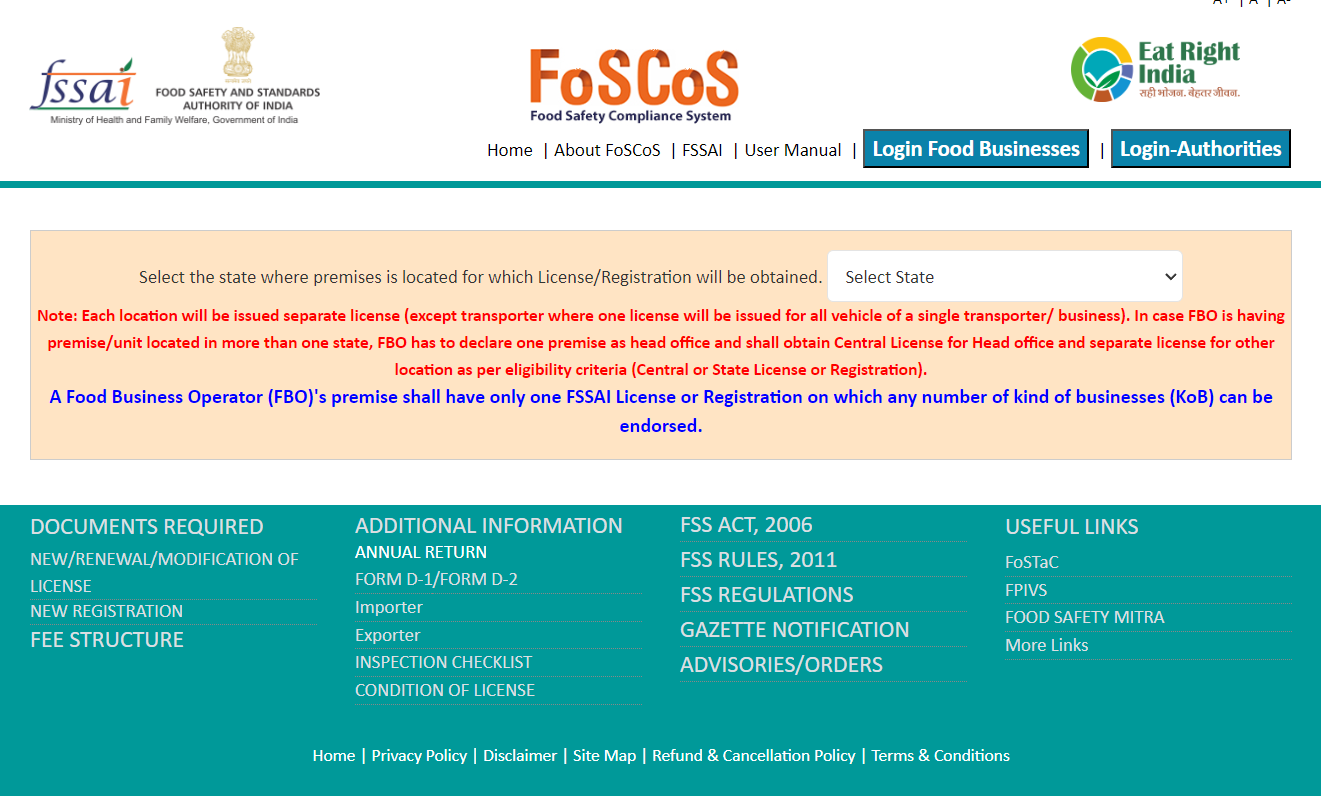
     Step 3 : Select the “ State”  where the business premise is located and proceed.

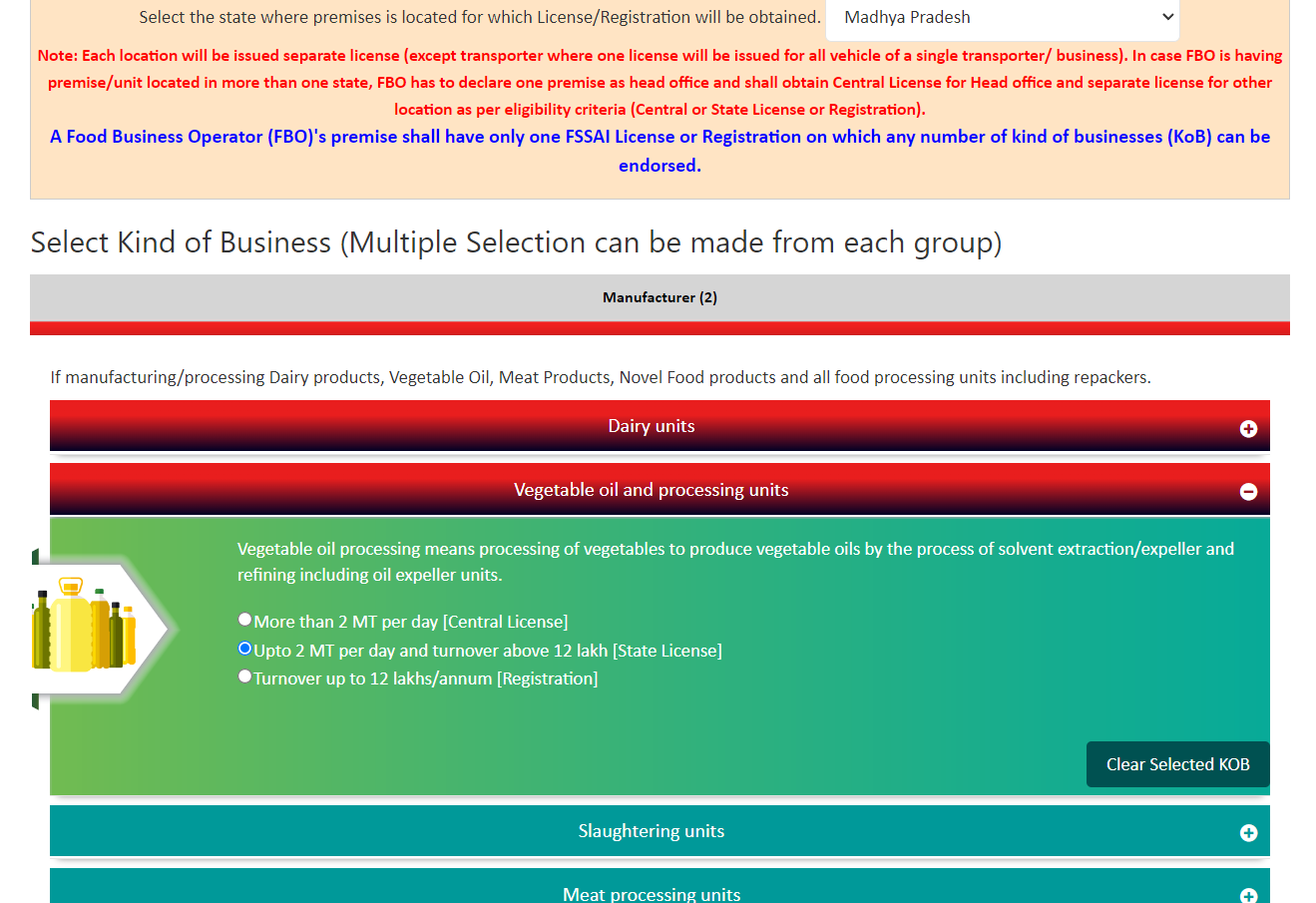
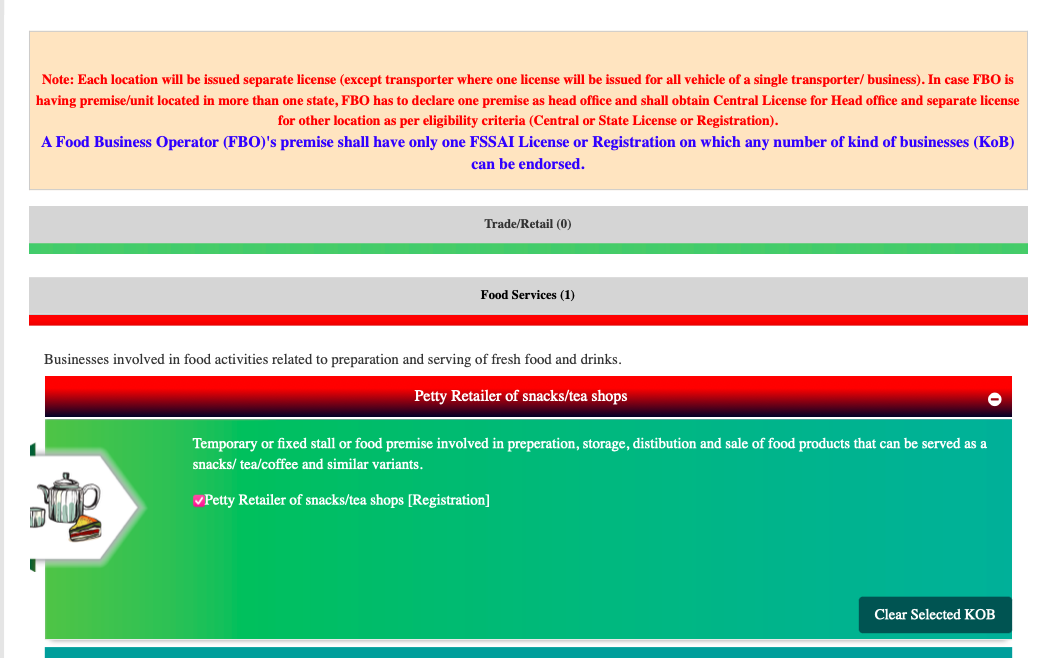
    Step 4: Select the Kind of Business [KoB] – as applicable. [Read Definitions before making

    E.g General manufacturing KoB Under “ Manufacturer”  Head 

    Read the eligibility criteria and select the appropriate option (deciding criteria between central license, state license  and registration ) and click on Proceed .

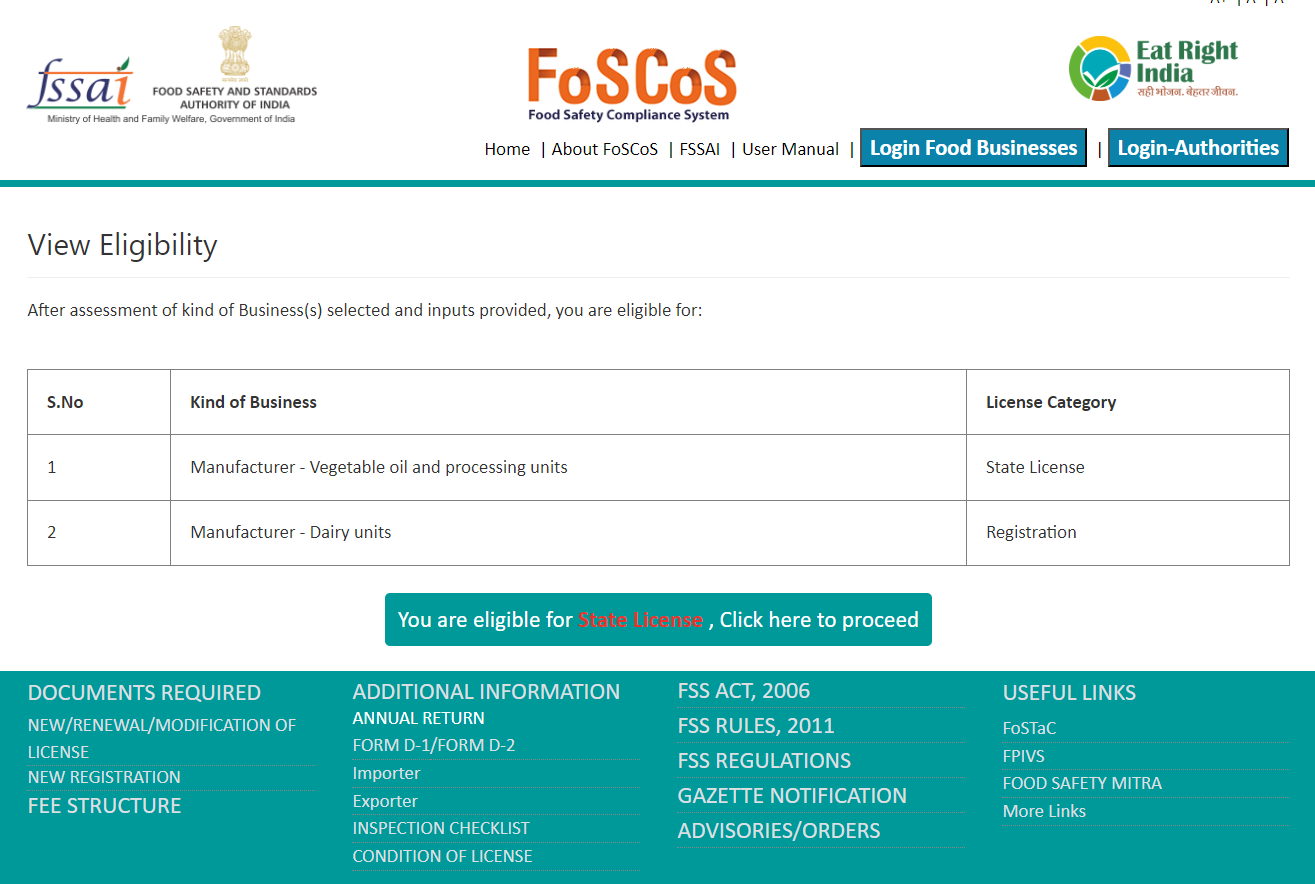
     Step 5 : System will assess the Eligibility Criteria. Proceed further by clicking “Click here to apply for Central/State license for all businesses”.

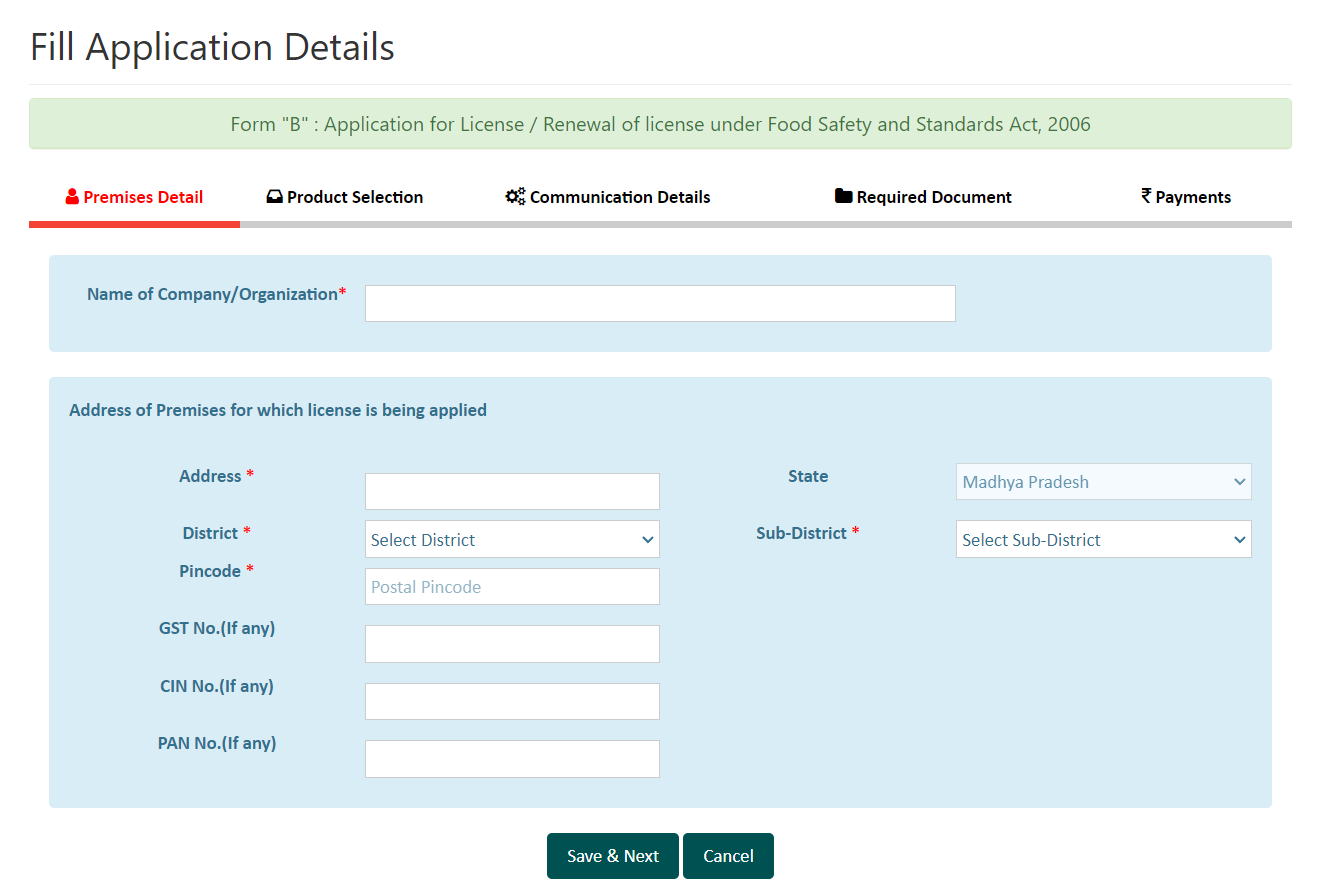
     Step 6 : Fill the business premise related details and click on “Save & Next”

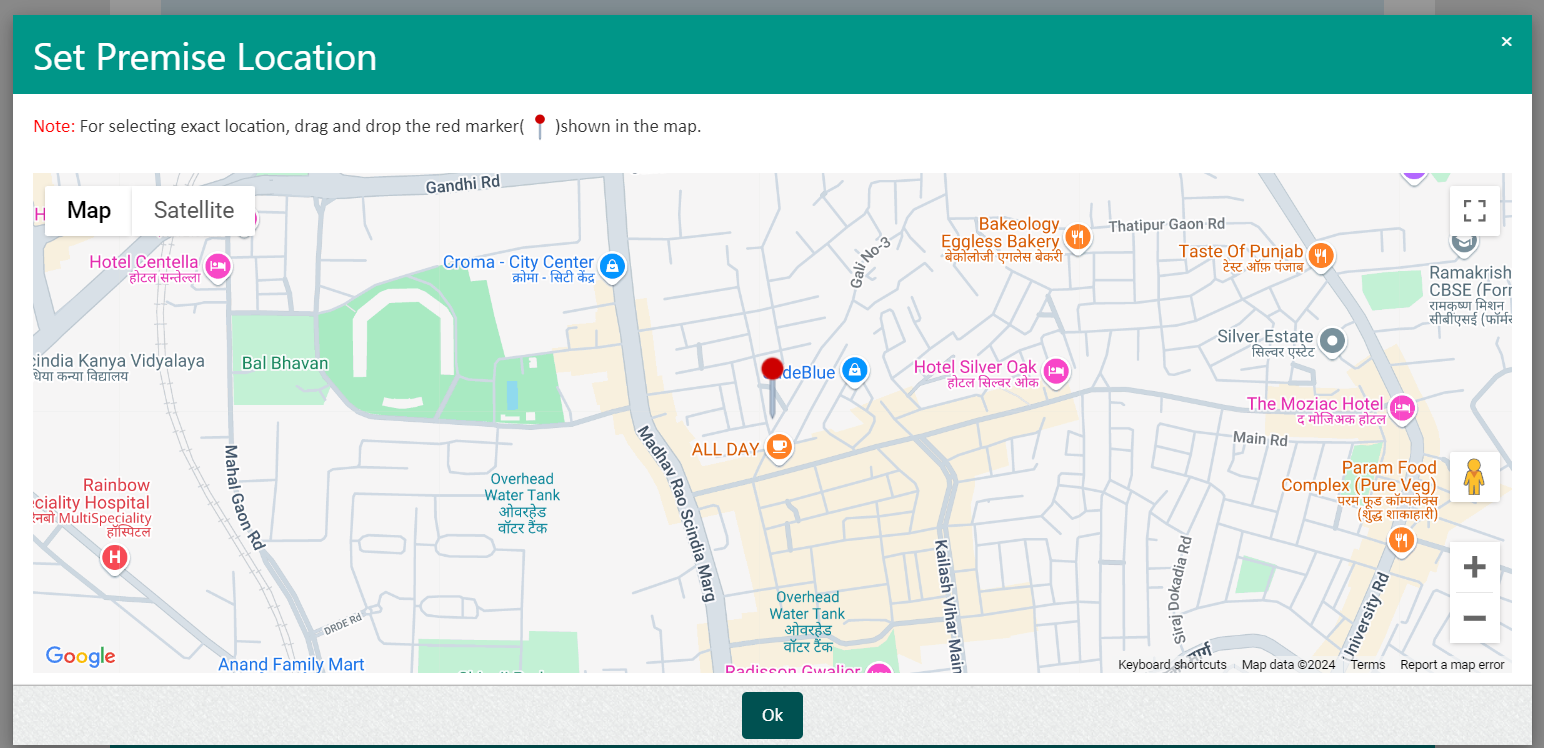
    Step 7 : Drag the Red marker to the exact location of the premises and click “ok”.

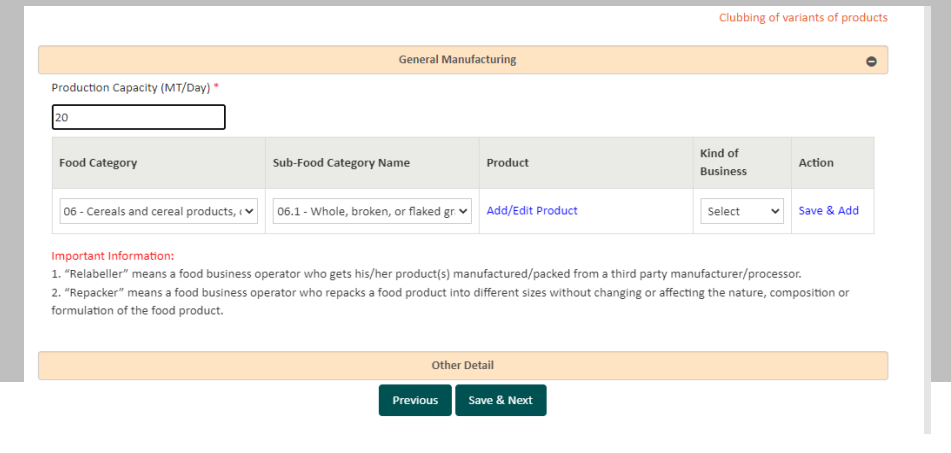
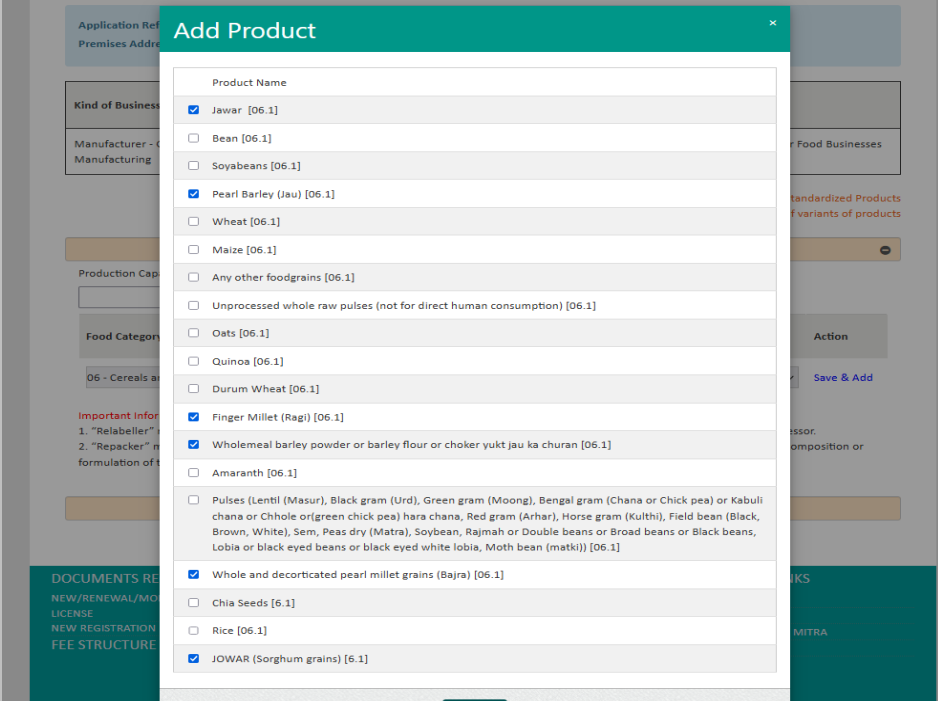
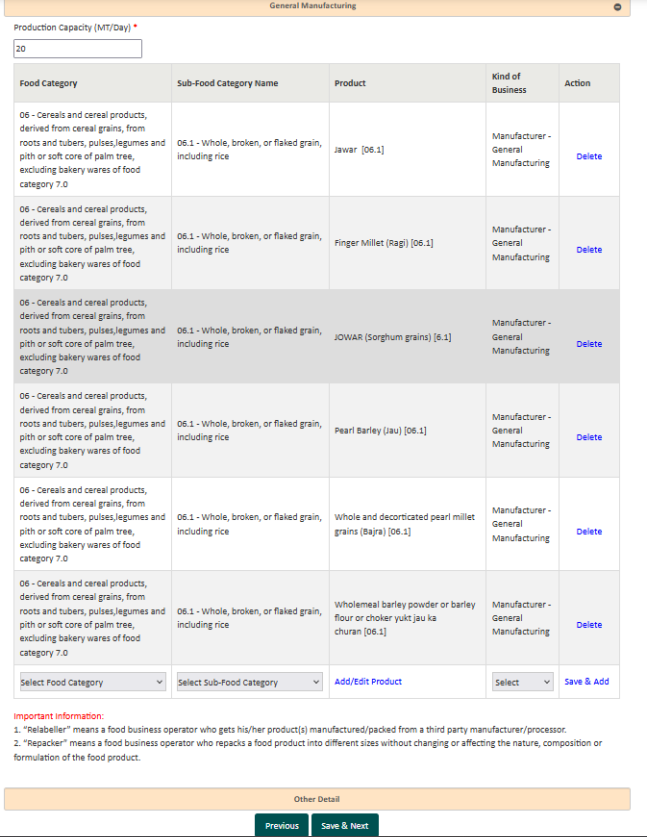
    Step 8 : Click on General manufacturing and fill mandatory fields. Choose food category as 06- Cereals and Cereal Products -> Sub-food Category as 06.1 or 06.2 -> Select the Millet based product from the list.

     For example – Finger millet (Ragi), Pearl Barley (Jau), Wholemeal barley powder or barley flour or chokar yukt jau ka churan, Whole and decorticated pearl millet grains (Bajra), Bajra Flour (Pearl Millet Flour), JOWAR (Sorghum grains), Jowar Flour (Sorghum Flour) etc. Then click on Save & Add.

    Step 9: If you want to continue with the application, you are required to create a login. 

    After creating the login details, Fill Form B and upload the documents required for the Manufacturing License [10]. 

    Production Capacity Wise Fee:  

    State License [Milling Units having Production Capacity upto 1 MT/day] – Rs. 3000 per annum. State License [Milling Units having Production Capacity more than 1 MT/day] – Rs. 5000 per annum. Central License [Other than milling units] – Rs. 7500 per day In case of petty manufacturers having production capacity upto 100 Kg/day, only FSSAI Registration is required @Rs. 100 per year with only two documents.

    Step 10: User can log in by clicking on the box “Apply for License/Registration Fee: Rs.100 to 7500 per year” as shown in the figure below:(yellow box) 

    Step 11: Select the State and Read the Note and Read the Group Heads of Kind of Business, Click on Kind of Business under which the food business falls, user can read the definition of all Kind of Business under it and click on the radio button under it to proceed further.

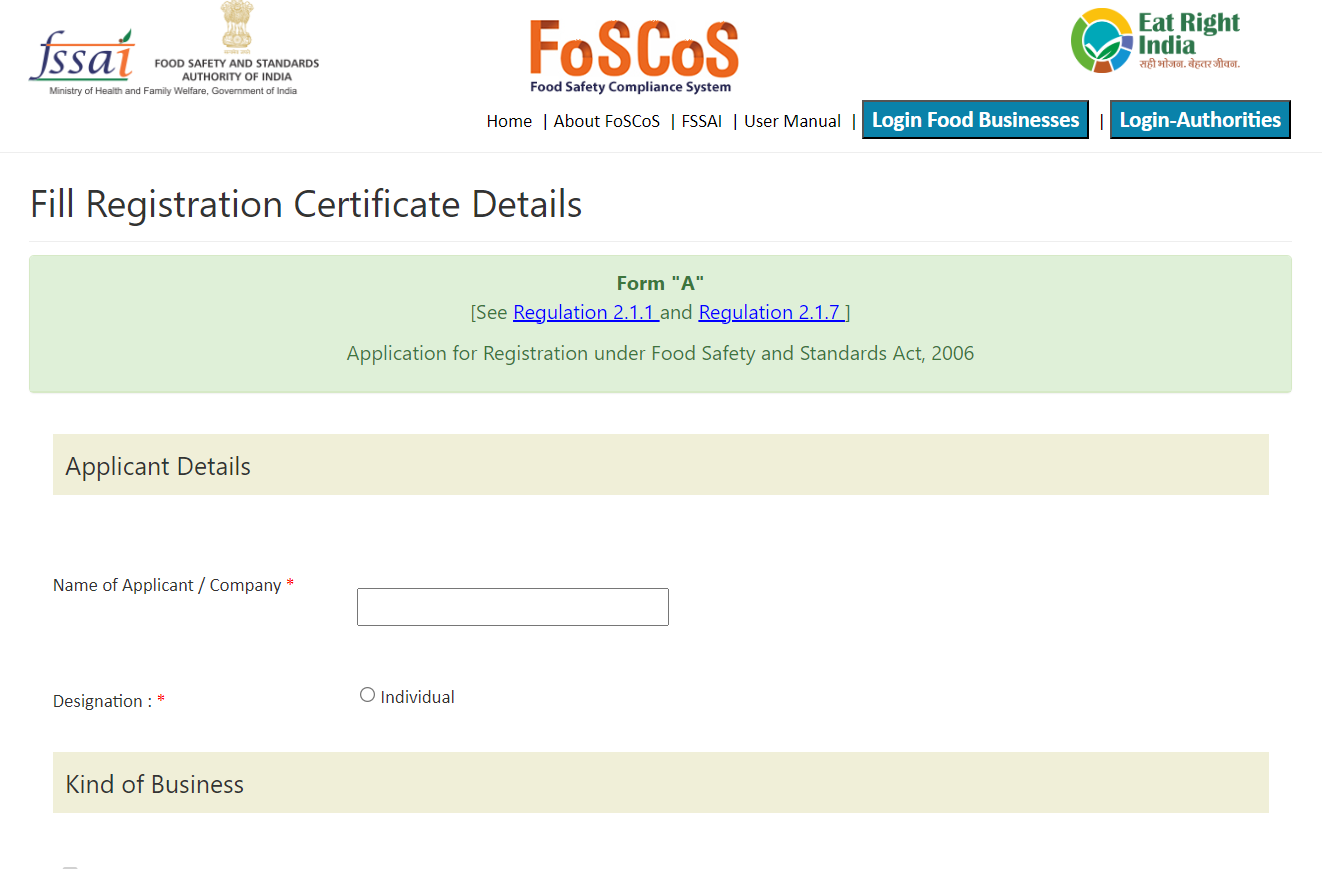
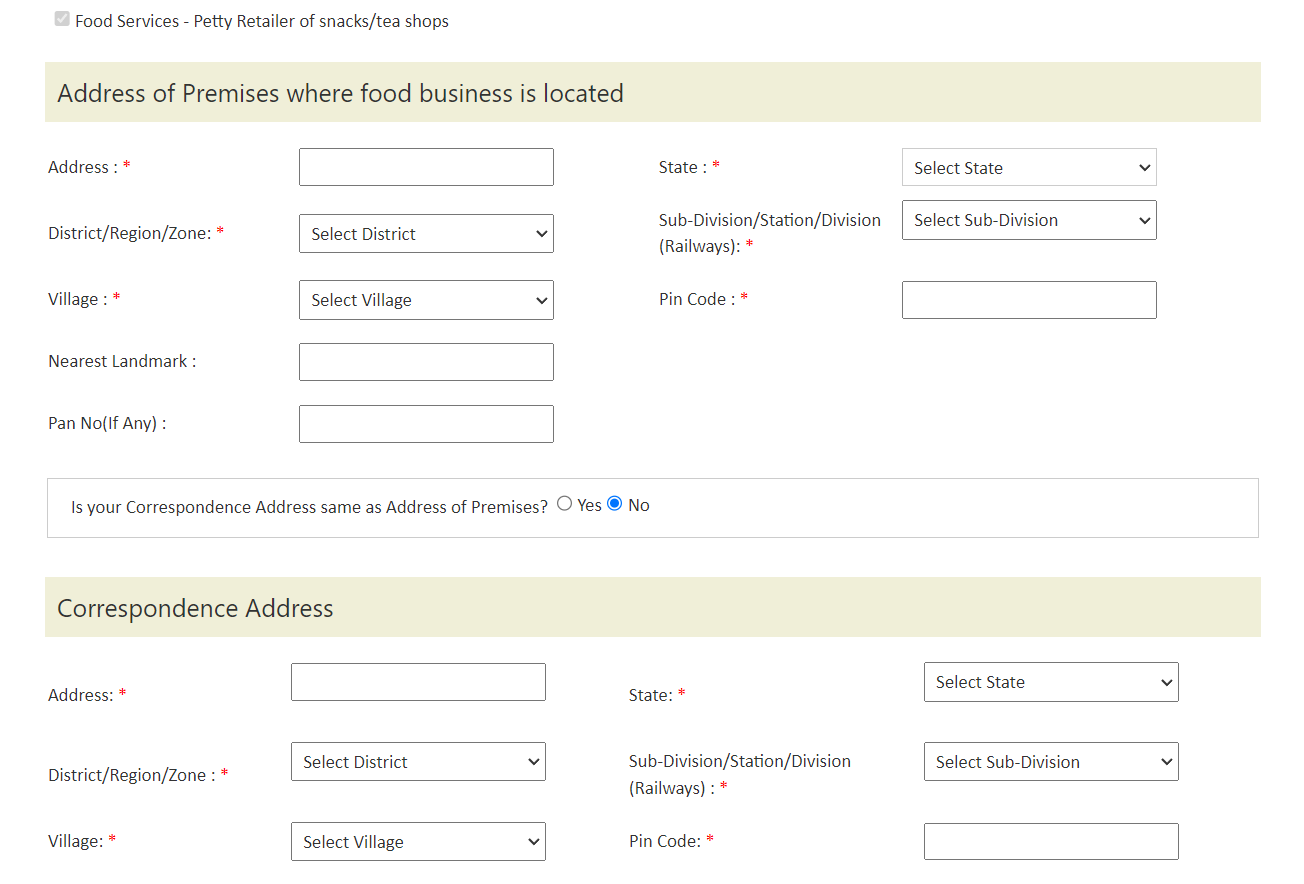
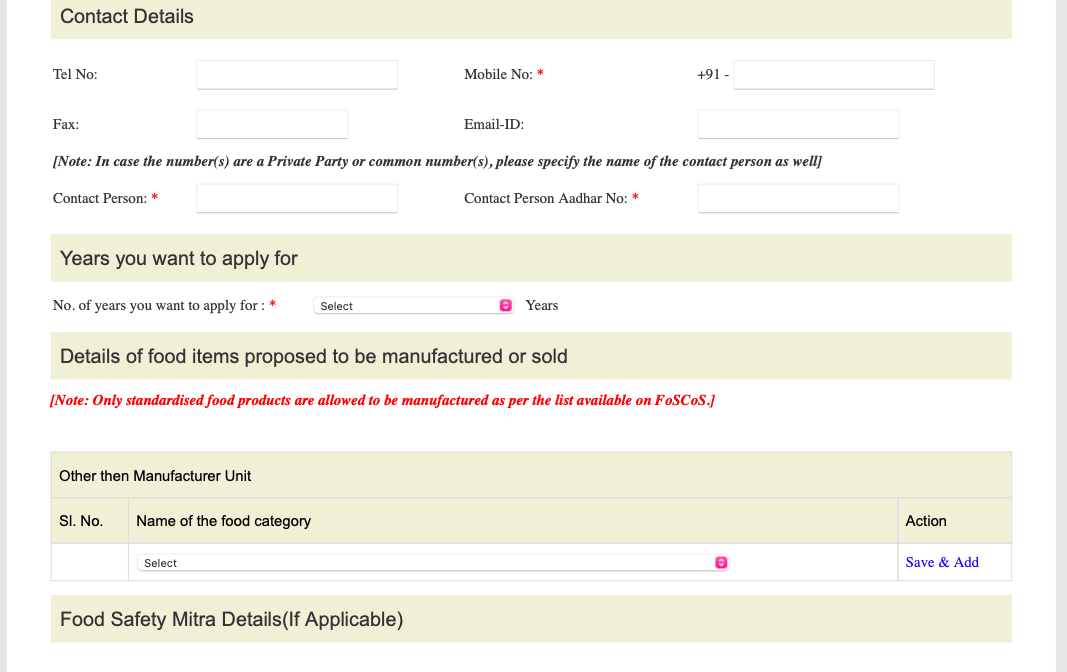
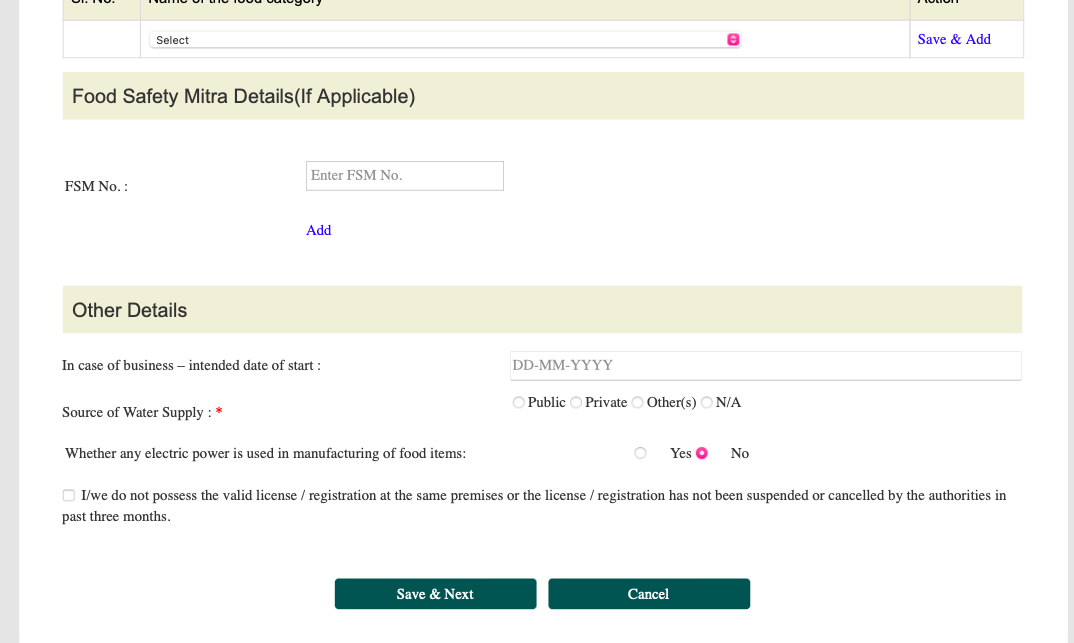
    Step 12: Fill in all the mandatory fields as shown in Form A.

    Step 13: Upload the documents, pay the fee with available modes and apply

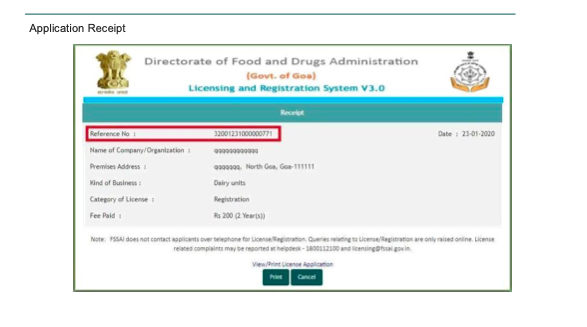
    Step 14: After completing the payment, a receipt will be generated with a 17-digit reference number which can be used for future reference.

    Step 15: User can track the status of application through the Homepage i.e. by using the reference number

    Once your application is submitted, you can track your FSSAI registration status online. 

    Cost and Renewal Fee of FSSAI License

    The cost of the FSSAI license depends on the type of license required. For instance, a Basic FSSAI registration has lower fees compared to a Central FSSAI license. The FSSAI certificate is issued once the application is approved, usually within 7-15 days.

    The cost of an FSSAI license depends on the type of license you apply for. Basic FSSAI registration fees are minimal, while a Central FSSAI license for larger businesses can be more expensive. It’s important to note that the FSSAI license has a validity period of 1 to 5 years, after which you need to renew it. FSSAI license renewal can be done easily through the FSSAI website by submitting a renewal application before the license expires. Failure to renew your FSSAI license can lead to hefty fines or suspension of your food business license.

    According to the FSSAI website the cost for registration is as follows : 

    Type of ApplicationCentral (1 Year)State (1 Year)Registration (1 Year)Konkan/Indian Railway (1 Year)
    New Application7500As per Schedule1002000
    Renewal Application7500As per Schedule1002000
    License/Certificate Modification7500As per Schedule1002000
    Duplicate License/Certificate10% of the Applicable License FeeAs per Schedule10% of the Applicable Certificate Fee10% of the Applicable Certificate Fee

    SCHEDULE

    Documents Required for FSSAI Registration

    Before applying, make sure you have all the documents required for FSSAI registration ready. The list of documents varies depending on the type of license. Basic FSSAI registration generally requires fewer documents than State licenses or Central licenses. You’ll need identity proof, address proof, a passport-sized photograph, and details of the business’s food products. For State licenses and Central licenses, additional documents such as a layout plan of your business premises, food safety management system plan, and water testing reports may be needed. We have provided a list of documents required for FSSAI Registration.

    BASIC FSSAI REGISTRATIONPhoto identity proof of the food business operators.

    Business constitution certificate, i.e. partnership deed, certificate of incorporation, shop and establishment license or other business registration certificate.

    Proof of possession of business premises, i.e. rental agreement, NOC from the owner of the rented premises, utility bills etc.

    Food safety management system plan.

    List of food products manufactured or processed.

    Bank account information.

    Supporting documents (if required) like NOC by Municipality or Panchayat, Health NOC, copy of License from the manufacturer, etc.
    STATE FSSAI REGISTRATIONForm B duly completed and signed

    Plan of the processing unit showing the dimensions and operation-wise area allocation

    List of Directors/ Partners/ Proprietor with address, contact details, and photo ID

    Name and list of equipment and machinery used with the number and installed capacity

    Authority letter from manufacturer nominated a responsible person name and address

    Analysis report of water to be used in the process to confirm the portability

    Copy of certificate obtained under Coop Act 1861/Multi-State Coop Act 2002
    CENTRE FSSAI REGISTRATIONForm B duly completed and signed

    Plan of the processing unit showing the
    dimensions and operation-wise area allocation

    List of Directors/ Partners/ Proprietor with address, contact details, and photo ID

    Name and list of equipment and machinery used with the number and installed capacity

    Authority letter from manufacturer nominated a responsible person name and address

    Analysis report of water to be used in the process to confirm the portability

    Source of raw material for milk, meat etc

    Recall plan wherever applicable

    Ministry of Commerce Certificate for 100% EOU

    NOC/PA document issued by FSSAI

    IE code document issued by DGFT

    Form IX

    Certificate from Ministry of Tourism

    Supporting document for proof of turnover and transportation

    Declaration form
    Documents Required for FSSAI License Registration

    Common Mistakes to Avoid During FSSAI Registration
    Practical advice on how to avoid delays and errors during registration

    1. Incomplete or Incorrect Documentation: One of the most common mistakes is submitting incomplete or incorrect documentation. Ensure that you have all the required documents in the prescribed format and that the information provided is accurate and up to date.
    2. Non-Compliance with Regulations: Failing to comply with the specific regulations and guidelines set by the FSSAI can lead to rejection or delays in the registration process. Familiarize yourself with the requirements and ensure that your food business meets all the necessary criteria.
    3. Improper Categorization: FSSAI has different categories for food businesses based on their size, nature, and activities. It’s important to accurately categorize your business during the registration process. Choosing the wrong category can lead to complications in the future.
    4. Incorrect Application Form: Filling out the application form incorrectly or providing incomplete information can lead to rejection. Double-check all the details, such as business name, address, contact information, and product details before submitting the application.
    5. Inadequate Food Safety Practices: FSSAI places great importance on food safety and hygiene. Neglecting proper food handling, storage, and preparation practices can result in rejection of your registration. Ensure that your business follows the necessary food safety protocols and maintains high standards of hygiene.
    6. Failure to Display FSSAI Logo: After obtaining FSSAI registration, it’s mandatory to display the FSSAI logo or the registration number on your food product labels. Neglecting to do so can result in non-compliance and legal issues.
    7. Ignoring Renewal Deadlines: FSSAI registration is not a one-time process. It requires periodic renewal. Missing the renewal deadlines can lead to the cancellation of your registration. Keep track of the renewal dates and submit the necessary documents within the specified timeframe.
    8. Neglecting Training Requirements: FSSAI often requires food handlers to undergo training programs on food safety and hygiene. Failing to provide the necessary training certificates or ignoring the training requirements can lead to complications during the registration process. 

    Conclusion

    FSSAI registration is crucial for any food business in India to ensure compliance with food safety standards. It not only enhances credibility but also builds trust among consumers. The registration process, while straightforward, can be prone to delays due to incomplete documentation, incorrect registration types, or lack of knowledge about the required procedures. By carefully checking all documents, choosing the correct registration category, and staying informed about FSSAI updates, you can avoid common pitfalls and ensure a smooth process. If needed, seeking expert assistance can further help in minimizing errors. Ultimately, securing your FSSAI registration is an essential step towards running a legally compliant and trustworthy food business.

    Contact TMWala today and obtain your FSSAI License and Registration!

    Authors:
    Ms. Sneha Jain (B.A.LL.B); &
    Ms. Tanushka Bhadoria (ITM University, LL.B. II Year)

  • Why do you need a Food License Registration(FSSAI)?

    Why do you need a Food License Registration(FSSAI)?

    A food license also called as the FSSAI Registration is a legal document issued by the Food Safety and Standards Authority of India, legally granting a business owner the authority to operate in the Food Industry in India. This mandatory-to-obtain licence certifies and validates the business’s credibility with regard to compliance of provisions, rules, procedures and safety & quality standards as prescribed under the Food Safety and Standard Act, 2006 (hereinafter referred to as ‘the said Act’ for the sake of brevity). With the onset of the digital realm, it has become all the more easier to secure FSSAI registration online. Read our article to know all about, FSSAI Food License, FSSAI Registration online, benefits, procedures, FSSAI registration fees etc.

    WHAT IS FOOD LICENSE? NECESSITY TO APPLY FOR FSSAI FOOD LICENSE REGISTRATION?

    As per Section 31 of the said Act, no person in India is authorised to conduct any business involving food, except under a license. Such licence is to be obtained from FSSAI, as provided under the Food Safety & Standards (Licensing and Registration of Food Business) Regulations, 2011.

    It is a mandatory for any person or entity involved in any of the following activities in the Food Industry to obtain a FSSAI Food License Registration:

    1. Manufacturing– For Ex: A factory producing chocolates
    2. Packaging– For Ex: A business packaging spices for retail
    3. Distribution– For Ex: A distributor supplying soft drinks to supermarkets.
    4. Storage– For Ex: A cold storage facility storing dairy products.
    5. Sale– For Ex: A bakery selling pastries and cakes.
    6. Importing– For Ex: A company importing gourmet cheese from Europe.
    7. Exporting– For Ex: A business exporting Indian snacks to the USA.
    8. Catering– For Ex: A catering service providing food for weddings.
    9. Restaurants– For Ex: A restaurant serving meals to customers.
    10. Online Food Delivery– For Ex: A cloud kitchen delivering meals via apps like Swiggy or Zomato.
    11. Wholesaling– For Ex: A wholesale supplier of grains and pulses.
    12. Retailing– For Ex: A grocery store selling packaged and fresh food items.
    13. Street Food Vending– For Ex: A food truck selling burgers and sandwiches.
    14. Food Ingredients Supply– For Ex: A business supplying raw ingredients like flour and sugar to bakeries.
    15. Repackaging– For Ex: A company repackaging dry fruits for retail sale.

    Thus, any food business involving the manufacturing, storage, distribution, sale, import and, encompassing, inter alia, restaurant establishments food processing factories, food delivery ventures are required to have a food license in order to be able to operate in whatsoever territories the Act applies.

    Furthermore, in case such a food business establishment operates without a license or fails to renew the term of said license (term of the license may vary with the type of license issued), same may result in a penalty up to 5 lakh rupees and/or imprisonment up to 6 months as given in Section 63 of the Act.

    However, the eligibility criteria for the above mentioned is a turnover exceeding 12 lakh rupees per annum. For smaller food business operations (FBOs), an FSSAI Registration certificate becomes mandatory and the same becomes applicable upon small vendors, hawkers, stall-holders etc. 

    Why Does Your Business Need a FSSAI Food License Registration?

    It becomes mandatory for anyone who wants to start a restaurant, bakery, hotel, cloud kitchen, food stand, Factory, Storage Unit, Distribution channel etc. relating to food in India to register for FSSAI. Here are some reasons why your business needs an FSSAI registration online:

    1. Statutory Compliance: It is a legal necessity for any business involved in the production, handling or sale of Food Articles to obtain FSSAI Registration in India, failure to do which, may result in Imprisonment upto 6 months and fine upto 5 lakh rupees as per section 63 of the Food Safety and Standards Act, 2006.
    2. Adherence to Food Standards: Obtaining food license is not just about securing a document. Food license is an indication that your business adheres to the quality and safety standards as laid down under the said act.
    3. People’s Trust: Obtaining a food license, without a doubt, boosts people’s trust in an establishment concerning food, as it communicates to consumers that the food business is legitimate, and that it is concerned with food safety. FSSAI license is effective in influencing customers to consider a particular food business because they understand the extent of the importance of food safety.
    4. Growth Possibilities: Food businesses can also get a license from the FSSAI, which can further their growth. Sellers with FSSAI License registration are allowed to supply food to government establishments, schools and hospitals, all of which require the supplier to possess an FSSAI food license. For food companies, this could have potential implications for new means of generating returns.
    5. Having Access to Data: Businesses that sell food and get an FSSAI license registration can also get helpful information and tools about food quality and safety. The FSSAI gives food businesses regular information and advice on best practices that can help them run better and keep up with the latest changes in the industry.
    6. Brand Reputation: Food businesses can improve the image of their brand by getting an FSSAI license online. A food business with an FSSAI food license shows customers, suppliers, and other important people that it takes quality and safety seriously.

    PROCEDURE FOR APPLICATION OF FSSAI Food License Registration

    The application process for an FSSAI registration online is provided as below:

    Step 1: Determine the Type of Needed license. The same may be:

    1. Basic License: For small-scale businesses.
    2. State License: For medium-sized businesses.
    3. Central License: For large-scale or multinational businesses.

    Step 2: Prepare Documentation required for the application of license, being:

    1. Proof of identity and address of the applicant.
    2. Proof of business address.
    3. Partnership deed or Memorandum of Association (MOA) for companies.
    4. Food safety management system (FSMS) plan.
    5. Details of food products handled.
    6. Additional Requirements:
    7. No Objection Certificate (NOC) from the local municipal authority.
    8. Importer-exporter code (for businesses involved in import/export).

    Step 3: Online Application. The following may be done as below:

    1. Register on the FSSAI portal.
    2. Select the location of Food Unit, the same may be regular premises, Railway Station or Airport/ Seaport.
    3. Select the kind of business and eligibility for license/ registration as has eben provided on the portal itself for convenience.
    4. Fill premises details and select Food Product Categories and Products appropriate for your business.
    5. A 17-digit user ID will be created based on Application reference number, which would be used further on to track the progress of application so submitted.
    6. Upload necessary documents, fill communication details provided in the application form.
    7. Submit processing fee along with the application. 

    Step 4: Application Review. The following is performed by competent authorities in order to ensure the credibility of the applicant’s business.

    1. Scrutiny of application by FSSAI officials.
    2. Possible inspections of the premises by competent authority.

    Step 5: License Issuance

    1. Issuance of the food license will be done by FSSAI upon the establishment of credibility of your application.
    2. Duration and validity period is license specific, and the same shall depend upon the kind of license so granted.
    3. Renewal process too is online[1], with renewal mandated before the expiry date or after the expiry date with penalties enumerated in regulations of FSSAI.
    4. FSSAI registration fees depends on various factors, therefore, it is suggested to contact a legal advisor to guide you regarding the same.

    CONCLUSION

    The Food Safety and Standards Act, 2006 has made compulsory for food establishments, with eligibility criteria so satisfied, to obtain a fssai license registration so as to operate. The same is essential in order to protect consumers from potentially life-threatening situations and to establish and maintain the standards of quality of food that reaches the public at large. 

    The application process has further been made ever so convenient with option to apply for Food licence online with the help of Food Safety Compliance System (FoSCoS), which is an advanced version of Food Licensing and Registration System (FLRS), launched in 2012 for issuance of pan-India FSSAI Licenses and Registration. The steps enumerated above for the obtaining of a food license can be done in the convenience of one’s home, however, it is essential that one remains vigilant and updated with regards to the changes that may be made in regulations and license pre-requisites as may be amended in accordance to the need of the hour.


    [1] FoSCoS – FSSAI

    Read more about Food/ FSSAI License: FSSAI Registration – legalguruindia.com/

    Government Website for obtaining Food/ FSSAI License https://fssai.gov.in/