Tag: copyright law

  • Copyright in the Era of Generative AI: The Debate Persists

    Introduction

    The fast pace of progress in generative artificial intelligence (AI) has revealed entirely new ways to create, disseminate, and use content in today’s time. Generative AI systems are now used for everything, for example like creation of visual images, musical compositions, articles, software code, and even poetry. Such AI systems have made their way into creative and commercial endeavours alike. While these technologies open endless avenues for creativity and productivity, they raise complicated legal and ethical issues, of which one of the most controversial and debated is generative AI copyright.

    The copyright laws intend to safeguard creative works and drive innovation, but they must face tests imposed by new technologies capable of producing almost human-like creations in seconds. Lawmakers, technology firms, legal experts, artists, and consumers are concerned about who owns the creations of generative AI, whether it is appropriate to train AI systems with the use of copyrighted material, and whether rights must be given to those who create copyright-protected works in the manual way. Platforms such as TMWala can assist by simplifying the copyright registration process, helping creators protect and document ownership of original works, and providing guidance on broader intellectual property protection

    Understanding Copyright in the Digital Age

    Copyright refers to a system of laws that gives original creators exclusive rights over their artistic creations like novels, music, plays, and any other artistic work. These rights ordinarily involve reproduction, distribution, adaptation, and communication of the work in question. The main aim of copyright is to protect creativity while promoting diffusion of knowledge and culture. For official information on copyright registration, legal procedures, and applicable rules in India, creators can refer to the Copyright Office, Government of India.

    Conventionally copyright has presumed that the creator of a work is human. However, with the growth of generative AI is challenging this notion by producing materials with little or no human involvement. Therefore, a crucial question arises whether a machine can be called an author or whether the creator of the AI should be regarded as an owner of the work.

    In many jurisdictions copyright law does not provide any legal answers in this sense thus creating legal problems.

    How Generative AI Works

    Generative AI models take in huge datasets consisting of texts, images, music, videos, and different kinds of content. While learning from the datasets, these systems are said to check for connections and patterns in data and not to memorize specific works. When generating outputs, these systems rely on their prompt from the users.

    While producing unique-looking content, AI makes use of materials that are already out there. The training data is believed to involve copyrighted material from books, websites, artworks, photographs, news articles, and other forms of digital material used for free by the public. 

    The Training Data Controversy

    Usage of copyrighted content for purposes of AI training is a controversial copyright issue. Business firms in the technological field argue that the process of AI training involves the use of data rather than the reproduction of any form of artistic expression. They argue that AI develops statistical associations instead of storing entire copies of works protected under copyright law, and therefore the learning of AI can be compared to that of humans.

    At the same time, artists, musicians, journalists, photographers, and authors have a contrasting view on the problem. They maintain that AI uses creative work for commercial purposes without obtaining any licenses or paying any royalties, and many of creators believe that if their creative work is used in the process of making AI, they should get a credit for it as well as any other compensation that they are entitled to.

    Due to the disagreement, there have been a lot of cases in different countries. Courts are often asked to adjudicate whether AI training is fair use, fair dealing, or copyright infringement provided the relevant national legislature.

    Ownership of AI-Generated Content

    Most copyright laws necessitate work to show originality owing to human creativity. Hence, AI-generated work may not enjoy copyright protection in various jurisdictions. With no human author, such works may instantly become part of the public domain.

    Nevertheless, numerous AI products involve substantial human intervention. Users may craft their prompts, modify the output, and combine several outputs. Therefore, the issue of how much creativity was exercised by the user is of paramount importance.

    Possible claims of ownership include the following:

    • The user who issued the prompt.
    • The developer of the AI system.
    • The person or organization that made use of the AI.
    • Combined ownership.
    • Lack of copyright protection because of the absence of enough human authorship.

    The absence of international consensus has created problems in obtaining copyright for businesses and professionals relying on AI-generated works.

    The Role of Fair Use and Fair Dealing

    Copyright litigation over ownership of AI raises questions of fair use and fair dealing.

    In those jurisdictions where fair use is recognized, courts typically analyse the following factors for consideration:

    • The purpose and character of the use;
    • The nature of the originating work;
    • The amount of material being used; and
    • The effect on the market value of the original work.

    It is still unclear whether AI training is deemed as fair use. Different conclusions could be reached in court based on how AI models were created, whether the content is present in outputs, and the nature of the technology.

    Countries implementing fair dealing mechanisms use exceptions that are narrower, which can potentially lead to different legal outcomes.

    Emerging Regulatory Responses

    Governments worldwide are actively examining how copyright laws should respond to generative AI. Some policymakers advocate mandatory transparency regarding training datasets, allowing creators to determine whether their works have been used. Another is licensing systems through which AI developers would compensate copyright holders for access to protected content.

    Several proposals also include:

    • Greater disclosure requirements for AI developers.
    • Mechanisms allowing creators to opt out of AI training datasets.
    • Collective licensing arrangements.
    • Clear labelling of AI-generated content.
    • Updated copyright definitions recognising varying levels of human contribution.

    International cooperation may become essential, as AI systems frequently operate across national borders.

    Ethical Considerations Beyond the Law

    Legal compliance alone may not resolve the broader ethical concerns surrounding copyright issues in generative AI.

    Many creators argue that respect for artistic labour extends beyond copyright law. Even if AI training is legally permissible, questions remain about fairness, transparency, attribution, and consent.

    AI developers increasingly recognise the importance of responsible innovation. Some organisations are exploring licensing agreements with publishers, artists, music companies, and stock image providers. Others have introduced safeguards to reduce the generation of content closely resembling copyrighted works. Building trust between technology developers and creative communities may prove just as important as legal reform.

    Finding the Right Balance

    Policymakers face the task of finding the right balance between two critical goals. On one side, strict copyright laws can stifle innovation in AI and exacerbate expenses in development and scientific breakthroughs.

    On the second side, without adequate protection, human creativity may suffer since it would permit commercial exploitation of their original works without permission and compensation.

    Hence, there is a need to have a legally balanced approach that would facilitate innovation and at the same time keep creators’ rights to their intellectual property intact.

    The Road Ahead

    The ongoing debate over copyright issues arising from generative AI technologies will continue to develop in accordance with advancements in technology, court decisions, and changes in legislation. 

    Future regulations may create a distinction among types of AI-generated content according to human involvement and AI training methods. There may also be a necessity for harmonization of copyright laws among countries to achieve a unified approach to cross-border digital technologies. 

    Enterprises implementing generative AI should respect regulations that change constantly and implement responsible AI regulation policies in accordance with copyright laws. At the same time, creators of generative AI technologies need to be aware of licensing and other legal protection possibilities.

    Conclusion

    Generative AI is one of the game changing and advent technologies of the 21st century, bringing unique new possibilities in the fields of creativity, efficiency and innovation. However, it also creates challenges to a few traditional assumptions on which copyright law is based. Issues related to ownership, authorship, licensing and copyrighted training data are still open to debate, which means that the legal and political disputes continue all around the world. 

    As numerous stakeholders, including governments, courts, technology firms and creative communities, are shaping the future of copyright legislation, it’s crucial to strike the right balance between protecting creator’s interests and promoting innovation. Good regulation should guarantee that creator’s interests are protected without putting any obstacles on the way of innovation. TMWala supports individuals, startups, and organisations by streamlining copyright registration and offering guidance on intellectual property matters, enabling creators to focus on innovation while taking practical measures to safeguard their creative works in the age of generative AI.

    FAQs

    1. What is generative AI?
    Ans. Generative AI creates text, images, music, code, and other content using machine learning.

    2. Can AI-generated content be copyrighted?
    Ans.  It depends on the country’s copyright laws and the level of human involvement.

    3. Is it legal to train AI on copyrighted content?
    Ans. This remains a debated legal issue in many jurisdictions.

    4. Who owns AI-generated content?
    Ans. Ownership varies based on applicable laws and the extent of human contribution.

    5. Can AI copy copyrighted works?
    Ans. AI should not reproduce copyrighted content, but disputes can arise in some cases.

    6. Why is copyright important for creators?
    Ans. It protects original works and grants creator’s exclusive legal rights.

    7. Should creators register their copyright?
    Ans. Registration strengthens ownership claims and aids in legal enforcement.

    8. How can businesses protect AI-assisted creations?
    Ans. By documenting human contributions and securing intellectual property where applicable.

    9. How does TMWala help creators?
    Ans. TMWala assists with copyright registration and intellectual property guidance.

    10. Will copyright laws change because of AI?
    Ans. Many countries are considering updates to address AI-related copyright challenges.
  • The Role of Intellectual Property Law in Innovation

    Introduction

    Innovation is one of the major factors of growth in the economy, technology, and society. It is due to innovation that countries can solve issues and improve living conditions. The key word in the previous sentence is “innovation,” since the realization of innovative idea requires a lot of time, money, research, and skills. Moreover, if innovator does not protect his or her innovation legally, innovator runs risks of being copied again without getting neither recognition nor profit.

    Here is where IP law comes into account. IP law allows creators, inventors, and all people involved in the activity to hold legal rights to creativity they produce, thus giving them more incentives for innovations. IP law provides protection for inventions, creative works, brands, and confidential information ensuring that innovations possess a safe environment for development

    TMWala can assist innovators, startups, and companies in dealing with IP registrations and IP issues. TMWala will give innovators access to legal trademark services and advice that will help companies preserve IP in its totality.

    Understanding Intellectual Property Law

    The branch known as Intellectual Property law is responsible for ensuring that creators and innovators retain the exclusive rights to their intellectual creations for a particular time. The law allows for control over the way in which creative work is reproduced, used, or commercialized, as well as the expectation for obtaining credit and reward for the intellectual activity.

    Types of Intellectual Property Rights:

    Patents: Patents are granted to an inventor for an invention or using technology. The patent permits the inventor to manufacture and make use of the invention or grant related licenses for the prescribed period.

    Copyright: Copyright protects the original works of authors, literary, or artistic works, including books, films, programs, and other creative work.

    Trademarks: Trademarks protect the names, logos, slogans, and symbols so that the products provided by the entrepreneur may be distinguished from the other similar products.

    Trade secrets: Business information that provides competitive advantages is protected.

    Designs: The design of an item is protected along with the item itself.

    Each kind of property is meant for a specific purpose, and altogether they help develop the creativity and progress in different areas.

    Encouraging Innovation

    A key goal of IP laws is to provide an incentive to inventors and innovators. The creation of new products, processes, or services usually requires a high financial investment and takes a lot of time. Without IP protection, competitors can easily copy successful innovations, thus diminishing what motivates businesses and individuals to invest in new ideas.

    IP law grants innovators exclusive rights over inventions or any other object of proprietary rights. They can thus recover their investments in the creation of their product by making use of licensing, marketing, and other means. 

    For instance, pharmaceuticals spend billions of amount on searching for and testing new medicines. Patenting allows them to enjoy monopoly rights over the sale of their product for a certain period, and they can thus recover the costs of the development of the drug before any generic medicine appears on the market.

    Promoting Research and Development

    The significance of intellectual property law lies in its crucial contribution to the advancement of research and development (R&D). Many companies feel confident investing in initiatives that include innovations knowing that the achieved results will be legally protected. Research institutions, universities, and businesses often work together due to intellectual property rights that create opportunities for sharing ownership, licensing inventions, and commercializing results of their cooperation.

    On the other hand, this strong protection of intellectual property allows for constant advancements in different fields, like artificial intelligence, healthcare, environmental technology, and digital solutions, allowing researchers to find the motivation for finding new concepts.

    The impact of intellectual property is especially felt by startups and small businesses as unique inventions, logos, or technological solutions become valuable assets for attracting investors and competing with larger companies.

    Facilitating Technology Transfer

    Moreover, knowledge transfer is facilitated through the creative use of IP rights since they permit the licensing of innovations. IP holders may allow other entities to implement the technologies while being compensated financially.

    The use of technology transfer is beneficial because it promotes knowledge dissemination and cooperation between companies, academic institutions, and countries. The less developed nations have the chance to receive access to the latest technologies thanks to the principle of respecting the intellectual property legislation.

    Apart from that, licensing enables businesses to broaden their activity without actual producing and supplying goods. Thus, it allows innovations to leave the research laboratories and appear in practice where they can help consumers and industries.

    Supporting Economic Growth

    A well-developed intellectual property regime has a role to play in boosting economic development. Industries that rely on intellectual property for their operations provide jobs, stimulate the entrepreneurial spirit, and attract investments. Firms with valuable intellectual assets benefit from favourable market position and more opportunities for growth.

    Most of the times, startups and small businesses use trademarks, patents, and copyrights as means of gaining credibility and securing a competitive edge. For instance, the registered trademark contributes to brand recognition and prevents rivals from using the same names or identities.

    Strong IP protection contributes to foreign investment as companies prefer to do business in countries where innovation and brands are protected by law. Therefore, countries with developed intellectual property systems manage to achieve increased levels of innovation, trade, and economic competitiveness.

    Challenges and Criticism

    Intellectual property law has faced numerous challenges, despite its importance. The excessive protection or the abuse of intellectual property rights can also hinder competition and raise costs as well as limit public access to various important products and information. For instance, there are many debates concerning pharmaceutical patents, where it is often necessary to find a fair compromise between rewarding the innovation process and ensuring that medicines are available.

    Intellectual property disputes can also be expensive and time-consuming, which can be particularly difficult for startups and small businesses, that might not have enough resources for a lawsuit. Moreover, enforcing intellectual property laws in international markets can be difficult due to various legal systems and regulations.

    With the development of technology, new problems have arisen, such as online piracy, piracy, unauthorized replication, software violations, and counterfeit products. Therefore, the companies must find the ways of protecting their intellectual property at the same time as various government bodies try to adapt the law to new challenges with time.

    Intellectual Property in the Digital Era

    New digital awareness, artificial intelligence, and online support are changing the scope of intellectual property. Digital content can duplicate easily and travel, more complexity in compliance with copyright laws appears. We cannot underestimate the role of inventions and creative works produced by AI in the matter of ownership, authorship, and liability.

    In the modern business environment, companies must be more proactive in the sphere of the protection of intellectual property. Digital brands, online-content, software, and new technologies call for proper legal measures in order not to be abused.

    Changing conditions provide an opportunity for third parties services such as TM Wala, which can help businesses protect their trademarks and make their brands even stronger. TM Wala eases the process of trademark registration and provides appropriate legal advice thus helping entrepreneurs and companies focus on innovations while their intellectual property is duly protected.

    Conclusion

    Intellectual property law plays a significant role in promoting innovation by protecting the rights of inventors, creators, and businesses. By offering incentives, IP law plays a role in fostering investments in research and development, enabling technology transfer, strengthening business activity, and promoting economic growth. Through its legal recognition and protection, IP law allows innovators to be rewarded for their creativity, thus encouraging future innovations for the benefit of society.

    Further, to cope with the challenges caused by globalization and the advancement of digital technologies, intellectual property systems should continue evolving. In this regard, a balanced approach is needed to protect innovators while making knowledge and technologies available for further advancement.

    Protect your brand with our expert Intellectual Property Services, designed to help startups, entrepreneurs, and businesses secure their valuable intellectual assets. For businesses and entrepreneurs, intellectual property protection represents a crucial step towards the achievement of long-term success. TMWala can offer innovators and entrepreneurs with reliable trademark support and guidance to secure their brands and build up strong identity associated with their innovative endeavours.

    FAQs

    1. What is intellectual property (IP)?
    Ans. IP protects creations such as inventions, brands, designs, and creative works.

    2. Why is IP law important?
    Ans. It protects innovation and encourages creativity.

    3. What is a trademark?
    Ans. A trademark protects your brand name, logo, or slogan.

    4. What does a patent protect?
    Ans. A patent protects new inventions and technologies.

    5. What is copyright?
    Ans. Copyright protects original creative works like books, music, and software.

    6. What are trade secrets?
    Ans. They are confidential business information that provides a competitive advantage.

    7. How does IP support businesses?
    Ans. It safeguards assets, builds brand value, and attracts investors.

    8. Why should startups protect IP?
    Ans. IP helps startups secure their innovations and compete effectively.

    9. Can IP rights be licensed?
    Ans. Yes, IP owners can license their rights to others for commercial use.

    10. How can TMWala help?
    Ans. TMWala assists with trademark registration and IP legal guidance.

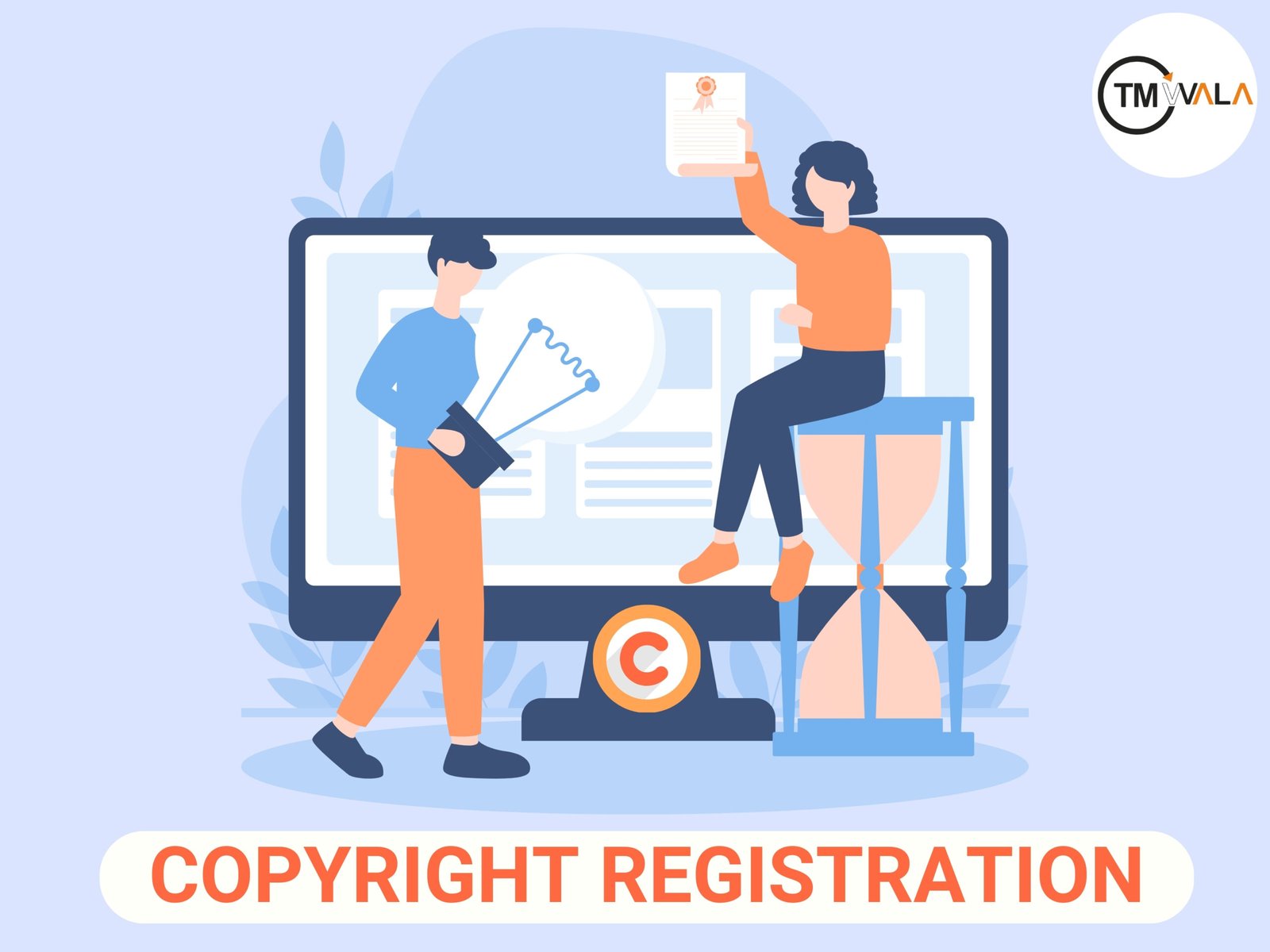
  • Copyright Registration Simplified: Safeguard Your Creative Works

    Copyright Registration Simplified: Safeguard Your Creative Works

    Copyright protection is essential for safeguarding original works of authorship or creators such as art, music, literary works, films etc. In India, copyright law is governed by the Copyright Act, 1957, which provides creators with the exclusive rights to use, reproduce and distribute its original works. This article will delve into the copyright registration process in India, its benefits, legal requirements and other key aspects that every creator must know to ensure adequate protection of their creative works. 

    What is copyright?

    Copyright is a legal right granting protection to creators over their original creative works such as literary, musical, artistic, dramatic, cinematographic, photographs, architectural designs etc.. It gives creators exclusive rights to use, reproduce, distribute, adapt, translate, perform, licence, assign and commercialization their works. Copyright prevents unauthorized use of works i.e., nobody can use a copyright work without creator’s permission, in turn providing creators with financial and moral protection for its original works of authorship. Copyright generally exists for the life of the author + 60 years except from cinematography works, sound recordings and photographs for which copyright subsists for 60 years from the date of publication.

    Works Eligible for Copyright Protection

    Copyright protection extends to the following categories of works:

    • Literary Works: Books, manuscripts, articles, blogs, computer programs & software, databases etc.
    • Musical Works: Musical scores, compositions, sound recordings etc.
    • Artistic Works: Paintings, sculptures, drawings, designs, architecture, photographs etc.
    • Cinematographic Films: Movies, videos and other audio visual works.
    • Dramatic Works: Plays, scripts, choreography etc.
    • Sound Recordings: Audio recordings, including music albums, podcasts etc.

    Essential Features of Copyright

    For a work to be copyrightable, it must possess the following essential features:

    Original Work: The work created, should be original, novel and unique. It should be the result of author’s creativity, skill, labour or judgement.

    Tangible form of Expression: Copyright lies in the expression of the idea and not the idea itself, thus, the work should be in a material presentable form. For Ex: Written Text, Recorded Music or Painted canvas.

    Key Benefits of Copyright Registration

    While copyright protection is automatic and exists in any work as soon as it is created, copyright registration offers several additional benefits, such as:

    Public Record: Registration acts a public record of ownership which is extremely helpful in case of legal disputes or unauthorised use.

    Prima Facie Evidence: In case of infringement, the registration certificate serves as prima facie evidence of ownership before the court of law.

    Legal Protection: Registration provides owners with the legal right to instate legal proceedings against unauthorised use.

    Commercialization Rights: Copyright registration gives the owner the right to exclusive use, adapt and distribute its work. The copyright holder can also monetize the work by licensing, assigning or selling it to third parties.

    Moral Rights: Creators get to retain moral rights over their works, even after assigning economic rights to third parties thereby ensuring recognition and protection against unauthorized modifications.

    Copyright Registration Process in India

    Copyright Registration Process in India is extremely simple and can be completed online by following the hereinunder mentioned steps:

    Step 1: Preparation of the Work for Submission and other Documents

    Before filing for copyright registration, ensure that the work you want to register is original and in a tangible form. Whether it’s a book, artwork, music, or software, the work must be in a format that can be submitted along with the application. Further, prepare other requisite documents such as No-Objection Certificate, Power of Attorney etc.

    Step 2: Filing of the Copyright Application

    You can file the copyright application online through the Copyright Office’s e-filing portal https://copyright.gov.inor submit it physically to the Copyright Office. The application must be filed in Form XIV and should include the following details:

    • Personal Information of the Applicant: Name, address, and nationality of the applicant.
    • Type of Work: The category of work being registered (literary, artistic, musical, etc.).
    • Title and Description: Title of the work and a brief description of its content
    • Language: The language of the work (if applicable)
    • Date of Creation: The date on which the work was first created or published
    • Author’s Information: Details about the author or creator of the work.
    • Owner’s Information: Details about the person in whom ownership rights of the work vests.
    • The application fee varies based on the type of work being applied for (literary, artistic, musical, etc.). The fee can be paid online or via a demand draft.

    Step 3: Uploading Documents

    Once the copyright application is filed, a unique diary number a is generated for your copyright application, which can be used for tracking the status of application. After this, the requisite documents have to be submitted. This can be done through the copyright registry’s online portal or the same can be sent to the Copyright Registry physically. The documents which need to be uploaded include: Form XIV (Copyright Application), Acknowledgement Receipt of Payment, Copy of the Work, No-Objection Certificate, Board Resolution/Partnership authorisation as applicable, Power of Attorney, TM-C (if applicable) etc.

    Step 4: Publication in the Copyright Journal

    After this, the application is published in the Copyright Journal for 30 days where the Copyright Registry invites the public to file objection against the copyright application. If an objection is raised, a notice is sent to both parties (the applicant and the objector). If the grounds of the objection are found sustainable, the copyright application is refused. If the grounds of the objection are not found satisfactory, the application is proceeded for examination.

    Step 5: Examination of the Application

    After this, application undergoes scrutiny by the copyright examiner who checks for any discrepancies or fallacies in the application. If discrepancies are found, the examiner issues a discrepancy letter, reply to which has to be filed within 1 month from the date of issuance. If the discrepancy is resolved, the application proceeds for registration, otherwise, matter is referred to hearing.

    Step 5: Issuance of the Copyright Registration Certificate

    After all this, the Copyright Office issues the Copyright Registration Certificate. This certificate is an official recognition of registration of the copyright in the applicant’s name, granting them legal rights over the work.

    Conclusion

    Copyright Registration is imperative for creators who are looking to protect their intellectual property. It provides legal rights, exclusive ownership and financial benefits ensuring that the creator has control their work and its use. The registration process is relatively straightforward and the benefits far outweigh the effort involved in securing copyright protection.

    If you need assistance in filing your copyright, you can contact TMWala, today!

    Want a copyright Registration? Purchase our best-selling service now: https://legalguruindia.com/copyright-registration/